
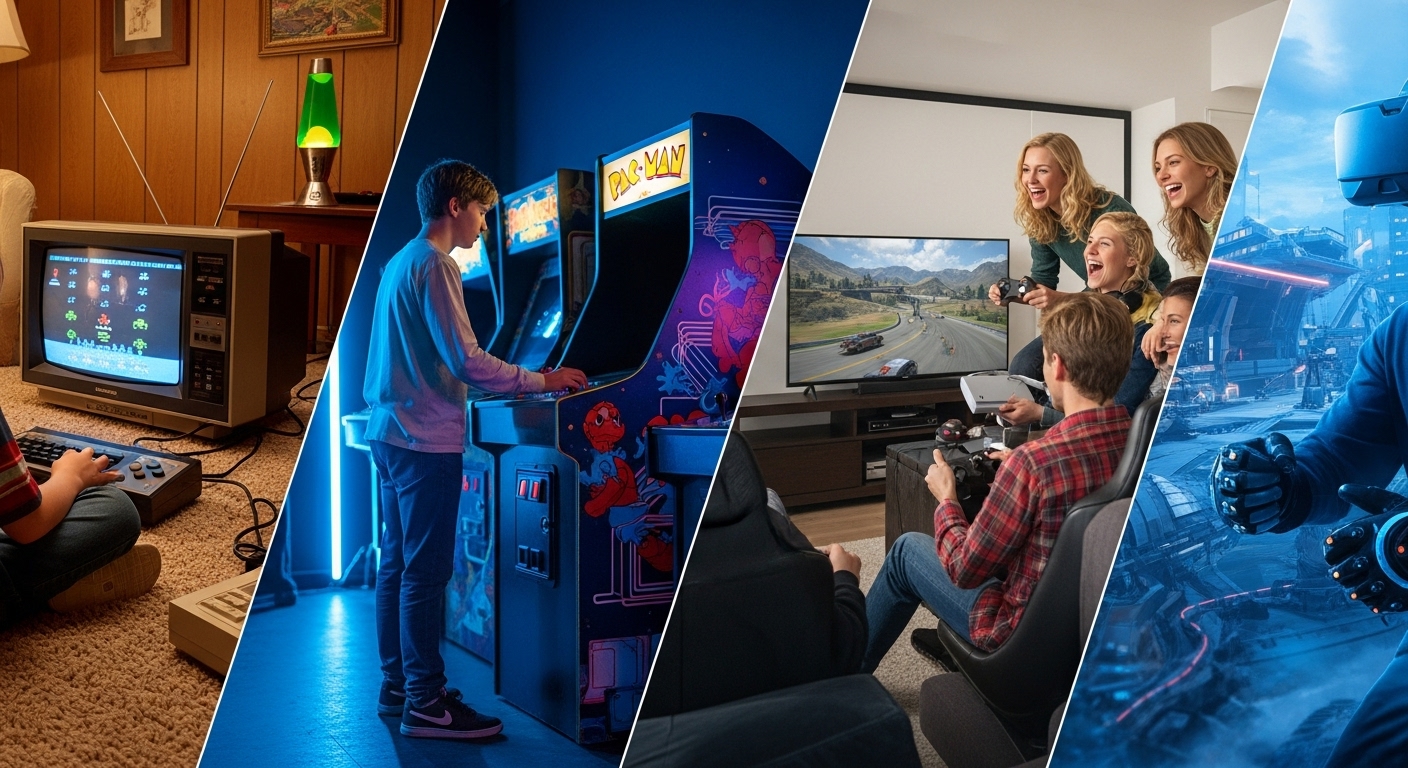
Introduction: The Birth of a Global Phenomenon
Gaming has evolved from a simple pastime to one of the most influential cultural and technological forces in the modern world. What began as a few blinking pixels on a screen has now transformed into immersive virtual realities that rival the complexity of real life. The world of gaming transcends boundaries of geography, age, and culture. It connects people across continents, fuels multi-billion-dollar industries, and shapes the way we interact with technology.
From the earliest arcade machines of the 1970s to the massive open-world games of today, gaming has become a defining feature of modern entertainment. It has not only changed how we play but also how we learn, communicate, and even perceive creativity. To understand the power of gaming, we must look back at its roots and explore the journey that has brought it to where it stands today.
The Early Days: When Gaming Was Born
The origins of gaming trace back to the 1950s and 1960s when computer scientists experimented with early forms of interactive entertainment. The first recognizable video game, “Tennis for Two,” was created in 1958 by physicist William Higinbotham. A few years later, “Spacewar!” appeared on university mainframes, captivating students and programmers alike.
The real explosion began in the 1970s with the arrival of arcade games. “Pong,” developed by Atari, became a global sensation and marked the beginning of commercial gaming. People lined up in arcades, eagerly inserting coins to experience the simple thrill of bouncing a pixelated ball back and forth. This era gave rise to the arcade culture—dark rooms illuminated by flashing screens, the clinking of tokens, and the joy of friendly competition.
These early games may seem primitive by today’s standards, but they laid the foundation for everything that followed. They demonstrated that games could be more than just diversions; they could be shared experiences, artistic expressions, and even technological showcases.
The Rise of Home Consoles: Bringing Gaming to the Living Room
By the late 1970s and early 1980s, the concept of gaming shifted from the arcade to the home. The release of the Atari 2600 revolutionized entertainment, allowing families to play video games without leaving their living rooms. Titles like “Space Invaders,” “Pac-Man,” and “Asteroids” became household names.
However, this golden era was not without its struggles. The video game crash of 1983 nearly destroyed the industry. Oversaturation, poor-quality games, and consumer fatigue led to a massive decline in sales. It seemed like gaming might become just another passing fad. But the industry’s resurrection came from the East—with the arrival of Nintendo.
Nintendo’s release of the Nintendo Entertainment System (NES) in 1985 marked a new beginning. Games like “Super Mario Bros.,” “The Legend of Zelda,” and “Metroid” redefined creativity and gameplay. These titles offered stories, characters, and worlds that captured the imagination of millions. The home console had not only survived but evolved into a cultural staple.
The 1990s: The Golden Era of Innovation
The 1990s are often called the golden age of gaming, and for good reason. This was the decade when gaming transformed from 2D sprites to 3D worlds. The introduction of consoles like the Super Nintendo, Sega Genesis, and later the Sony PlayStation changed everything.
Developers began to experiment with storytelling, graphics, and sound in ways never seen before. “Final Fantasy,” “Sonic the Hedgehog,” and “The Legend of Zelda: Ocarina of Time” pushed creative and technical boundaries. The PlayStation introduced cinematic storytelling and adult-oriented games that appealed to older audiences.
Meanwhile, personal computers emerged as powerful gaming platforms. PC games like “Doom,” “Quake,” and “StarCraft” became pioneers of genres such as first-person shooters and real-time strategy. Online multiplayer gaming also began to take shape, setting the stage for the connected worlds that would dominate the 2000s.
The 2000s: The Age of Online and Multiplayer Gaming
As the new millennium began, gaming entered an era of connectivity. Broadband internet transformed gaming from an isolated hobby into a social experience. The rise of online services like Xbox Live, PlayStation Network, and Steam revolutionized how people played and interacted.
Games like “Halo,” “Call of Duty,” and “World of Warcraft” brought players together in massive online worlds. Friendships and rivalries were forged in virtual battlefields and guilds. This was also the period when competitive gaming, or esports, began to emerge as a legitimate phenomenon.
Graphical fidelity improved dramatically during this time. Consoles like the PlayStation 2, Xbox, and Nintendo GameCube delivered cinematic experiences, while the PC platform continued to push technical boundaries. Games were no longer just entertainment—they were art, storytelling mediums, and global communities.
The 2000s also saw the rise of modding communities, where players customized and expanded their favorite games. This creativity fueled innovation and helped spawn new genres, such as the multiplayer battle arena and sandbox games.
The Mobile Revolution: Gaming in the Palm of Your Hand
The introduction of smartphones in the late 2000s brought another massive transformation. Suddenly, gaming wasn’t confined to living rooms or desktops—it was in everyone’s pockets. The rise of mobile gaming made the medium more accessible than ever before.
Titles like “Angry Birds,” “Clash of Clans,” and “Candy Crush Saga” reached audiences who had never considered themselves gamers. Mobile platforms turned gaming into a universal pastime, bridging age groups and cultures.
While some traditional gamers criticized mobile games for their simplicity or monetization models, their influence cannot be denied. They generated billions in revenue and introduced millions of people to interactive entertainment for the first time. Mobile gaming also opened the door for augmented reality experiences like “Pokémon GO,” which blended digital gameplay with the real world.
The Modern Era: Immersive Worlds and Virtual Reality
Today, gaming has reached levels of sophistication that early developers could only dream of. Modern consoles and PCs deliver hyper-realistic graphics, expansive open worlds, and advanced artificial intelligence. Games like “Red Dead Redemption 2,” “The Witcher 3,” and “Elden Ring” showcase the pinnacle of storytelling and design.
Virtual reality (VR) and augmented reality (AR) have introduced new dimensions of immersion. Players can now step directly into the worlds they explore, interacting with characters and environments in lifelike ways. Technologies such as motion tracking, haptic feedback, and AI-driven experiences are shaping the next frontier of gaming.
Cloud gaming has also emerged as a disruptive force. Platforms that stream games directly to devices eliminate the need for expensive hardware, making high-quality gaming more accessible than ever. The boundary between physical and digital entertainment continues to blur.
The Social Side of Gaming: Building Communities
Gaming is no longer a solitary activity—it’s a shared experience that connects people worldwide. Online multiplayer games, social platforms, and live streaming have turned gaming into a global conversation.
Services like Twitch and YouTube Gaming allow players to broadcast their gameplay, turning gaming into a spectator sport. Streamers and content creators have built entire careers around their passion for games, influencing millions of fans.
Esports has become a global industry, with professional players, sponsors, and massive tournaments filling stadiums. Titles like “League of Legends,” “Dota 2,” and “Counter-Strike” draw audiences comparable to traditional sports. The social aspect of gaming extends beyond competition—it fosters friendships, teamwork, and shared creativity.
Gaming as Art: The Power of Storytelling
One of the most profound shifts in gaming has been the recognition of games as a form of art. Modern titles often explore deep narratives, emotional themes, and complex characters. Games like “The Last of Us,” “Life is Strange,” and “Journey” demonstrate that gaming can evoke feelings of empathy, sadness, and joy just like literature or cinema.
Developers use visual design, music, and interactivity to create emotional experiences that resonate with players. Unlike passive media, gaming allows individuals to shape the story through their choices and actions. This interactive storytelling makes the medium uniquely powerful.
Artistic expression in gaming extends beyond narrative. The design of worlds, characters, and soundscapes showcases a fusion of creativity and technology. Every pixel, sound effect, and dialogue choice contributes to a holistic artistic vision.
The Business of Gaming: A Billion-Dollar Industry
Gaming has become one of the largest entertainment industries in the world, surpassing movies and music combined. Major publishers and independent studios alike compete to capture the attention of millions of players.
Revenue streams come not only from game sales but also from downloadable content, microtransactions, and subscription services. The rise of digital distribution platforms has reshaped how games are sold and consumed.
Indie developers have also found success in this landscape. Smaller studios create innovative experiences that often rival big-budget productions in creativity and depth. The democratization of game development tools has allowed anyone with a vision to share their ideas with the world.
From massive open-world adventures to minimalist puzzle games, the diversity of today’s gaming ecosystem reflects the boundless imagination of its creators.
The Psychological and Educational Impact of Gaming
Gaming is often misunderstood, but research has shown that it can have positive psychological and cognitive effects. Studies suggest that gaming improves hand-eye coordination, problem-solving, and spatial awareness. Strategic and cooperative games foster teamwork and communication skills.
Moreover, educational games have become powerful tools for learning. They teach history, mathematics, and science in interactive and engaging ways. Simulation games like “Minecraft: Education Edition” allow students to explore creativity and collaboration in a virtual environment.
Gaming can also provide emotional benefits. For many, games serve as a form of escapism and stress relief. They offer safe spaces to explore identity, emotion, and connection. However, balance is key—excessive gaming can lead to issues such as addiction or social isolation if not managed responsibly.
The Challenges: Ethics, Representation, and Inclusion
Despite its many achievements, the gaming industry faces ongoing challenges. Representation remains a critical issue. While progress has been made, there is still work to be done to ensure diverse and inclusive portrayals of gender, race, and identity in games.
Ethical concerns surrounding microtransactions, loot boxes, and data privacy also persist. Developers and regulators continue to debate how to balance profitability with player welfare.
Additionally, online toxicity and harassment are problems that need addressing. Efforts are being made to foster more positive communities through moderation tools and awareness campaigns, but it remains an evolving struggle.
The Future of Gaming: Where Do We Go Next?
The future of gaming is boundless. Advances in artificial intelligence, machine learning, and procedural generation promise to make worlds more dynamic and responsive. Players will encounter stories that adapt to their choices in ways never before possible.
Cross-platform play and cloud streaming will continue to make gaming more inclusive and accessible. Virtual and augmented reality will likely expand into mainstream entertainment, education, and even therapy.
Perhaps the most exciting frontier is the merging of gaming with other technologies. The rise of the metaverse hints at interconnected digital universes where people can play, work, and socialize seamlessly. Whether this vision becomes reality remains to be seen, but the foundation has already been laid.
Conclusion: The Infinite Game
Gaming has come a long way from its humble beginnings. It has evolved through decades of innovation, creativity, and passion. What started as simple entertainment has become a cornerstone of global culture, shaping art, technology, and society.
At its heart, gaming is about connection—between player and world, between imagination and reality, and between people across the planet. It is a medium that continues to grow, adapt, and redefine itself.
As technology progresses, gaming will only become more immersive, inclusive, and transformative. The story of gaming is far from over; in fact, it’s still being written—one level, one world, and one player at a time.