
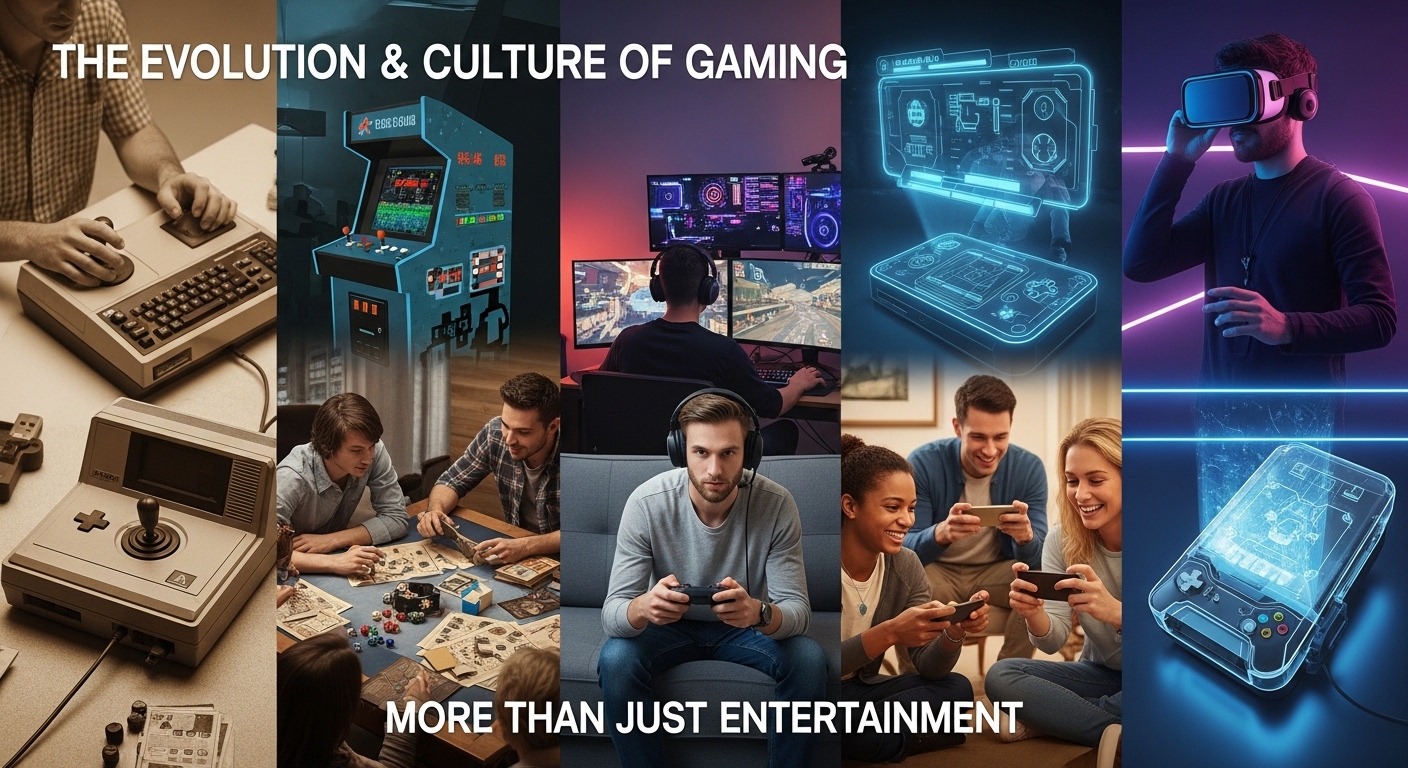
Gaming has transformed over the past few decades from a niche hobby to a global cultural phenomenon. What began as simple pixelated adventures on consoles has evolved into complex, immersive worlds that captivate millions. Today, gaming is not just about entertainment; it intersects with technology, storytelling, social interaction, and even professional careers. In this post, we will explore the evolution of gaming, its cultural significance, technological advancements, diverse genres, the rise of esports, and the future prospects that promise to redefine the way we play.
The Origins of Gaming: From Arcades to Consoles
The history of gaming dates back to the early 1970s when arcade machines started to populate entertainment venues. Games like Pong introduced players to competitive digital experiences for the first time. These rudimentary games relied on simple mechanics but laid the foundation for interactive entertainment.
By the late 1970s and early 1980s, home consoles such as the Atari 2600 and Nintendo Entertainment System (NES) brought gaming into living rooms worldwide. These platforms allowed players to enjoy a variety of experiences from shooting aliens to solving puzzles, making gaming accessible and appealing to a broader audience. The era also introduced iconic characters and franchises that remain relevant today.
Technological Evolution in Gaming
One of the most exciting aspects of gaming is its constant technological evolution. Early consoles were limited in graphics, sound, and memory, but advances in computing power and graphics rendering transformed the gaming experience dramatically.
Graphics and Visuals
Modern games are visually stunning, with realistic environments, lifelike characters, and cinematic storytelling. Technologies like ray tracing, high dynamic range (HDR), and 4K resolution enhance realism and immersion. Players now explore vast open worlds that feel alive, complete with dynamic weather, day-night cycles, and interactive environments.
Sound and Music
Sound design has become a critical aspect of gaming. From orchestral soundtracks to 3D spatial audio, sound contributes to atmosphere and storytelling. Audio cues can guide players, heighten tension, or elicit emotional responses, making games more than just visual experiences.
Virtual Reality and Augmented Reality
Virtual reality (VR) and augmented reality (AR) have introduced a new dimension to gaming. VR headsets allow players to step into fully immersive worlds, while AR games like Pokémon Go blend digital elements with real-life environments. These technologies push the boundaries of interactivity and engagement.
The Cultural Impact of Gaming
Gaming has permeated modern culture in ways that extend beyond entertainment. It has become a social phenomenon, shaping communities, influencing art, and even inspiring academic research.
Gaming Communities
Online multiplayer games have fostered global communities where players connect, cooperate, and compete. Platforms like Discord and Twitch provide spaces for discussion, streaming, and content sharing. Gaming communities are diverse, often forming around shared interests, genres, or specific games.
Representation and Storytelling
Modern games often explore complex narratives and social themes. Developers are increasingly emphasizing character diversity, inclusive storytelling, and moral choices, allowing players to experience different perspectives. Games like The Last of Us, Life is Strange, and Assassin’s Creed tackle themes of identity, survival, and ethics, reflecting broader societal issues.
Influence on Media and Art
Gaming has influenced other forms of media, inspiring movies, television shows, and music. Video game aesthetics have become part of popular culture, and game-inspired art, cosplay, and fan content thrive in digital spaces. The storytelling techniques in games are also being recognized for their cinematic quality, blurring the line between films and interactive experiences.
Exploring Gaming Genres
One of gaming’s strengths is its diversity. Different genres cater to various interests, skill levels, and experiences.
Action and Adventure
Action games emphasize fast-paced gameplay, reflexes, and coordination. Adventure games often focus on exploration, puzzles, and narrative. Many games combine these elements, creating experiences that challenge both intellect and skill.
Role-Playing Games (RPGs)
RPGs allow players to assume the roles of characters in expansive worlds, making choices that affect outcomes. Games like The Witcher and Skyrim provide rich narratives, character development, and open-world exploration, appealing to players who enjoy immersion and strategy.
Strategy and Simulation
Strategy games test planning, resource management, and critical thinking. Real-time strategy games require quick decision-making, while turn-based strategy games allow more deliberate planning. Simulation games, such as farming or city-building games, let players create and manage systems, providing a sense of control and creativity.
Sports and Racing
Sports games replicate real-world sports with high levels of realism and competitiveness. Racing games focus on speed, reflexes, and precision driving. These genres often attract competitive players and fans of real-world sports alike.
Horror and Survival
Horror games leverage atmosphere, suspense, and psychological tension to deliver thrilling experiences. Survival games combine resource management, exploration, and combat, creating intense and challenging gameplay.
The Rise of Esports
Esports has transformed gaming from a personal hobby into a professional industry. Competitive gaming attracts millions of viewers worldwide, with tournaments offering significant prize pools.
Competitive Gaming
Games like League of Legends, Dota 2, and Counter-Strike have thriving competitive scenes. Professional players dedicate countless hours to training, strategy, and teamwork, similar to traditional athletes.
Streaming and Content Creation
Streaming platforms have revolutionized how audiences engage with games. Gamers can broadcast their gameplay live, interact with viewers, and even monetize their content. This has created careers for influencers, commentators, and content creators, further embedding gaming into modern culture.
Gaming as a Career
Beyond playing, gaming offers numerous professional opportunities. Game development, design, programming, esports management, marketing, and journalism are all viable careers in this rapidly expanding industry.
Gaming and Education
Games are increasingly recognized as educational tools. Serious games and gamified learning experiences can enhance problem-solving, critical thinking, and collaboration skills. Games like Minecraft and Kerbal Space Program promote creativity and learning in subjects such as architecture, engineering, and physics.
The Psychological and Social Effects of Gaming
Gaming’s impact on the brain and social behavior has been widely studied.
Cognitive Benefits
Games can improve hand-eye coordination, multitasking, memory, and problem-solving skills. Strategy and puzzle games encourage critical thinking, planning, and adaptive learning.
Social Interaction
Online multiplayer games provide social experiences, allowing players to meet new people, collaborate, and form lasting friendships. Gaming can also foster empathy, teamwork, and leadership skills in cooperative environments.
Mental Health Considerations
While gaming offers benefits, excessive play can have negative consequences. Balancing gaming with other life activities is essential. Many developers are now incorporating features to promote healthy gaming habits, such as parental controls, time reminders, and accessibility options.
Gaming Platforms and Accessibility
The accessibility of gaming has expanded dramatically in recent years.
Consoles
Consoles like PlayStation, Xbox, and Nintendo Switch offer dedicated gaming experiences with high-quality graphics, exclusive titles, and user-friendly interfaces.
PC Gaming
PC gaming remains a versatile and powerful platform. It offers customization, modding communities, and access to a wide range of games. Advanced hardware allows enthusiasts to experience games at high resolutions and frame rates.
Mobile Gaming
Mobile games have democratized gaming, making it accessible to anyone with a smartphone. Games like Candy Crush, PUBG Mobile, and Genshin Impact reach global audiences and often use free-to-play models with in-game purchases.
Cloud Gaming
Cloud gaming allows players to stream games without high-end hardware, broadening accessibility. Platforms like GeForce Now, Xbox Cloud Gaming, and Stadia have begun to redefine how games are distributed and experienced.
Future Trends in Gaming
The future of gaming promises exciting developments that could further transform the industry.
Artificial Intelligence
AI is enhancing gaming in multiple ways, from creating intelligent non-player characters (NPCs) to personalizing gameplay experiences. AI-driven procedural generation can produce vast, unique game worlds for players to explore.
Cross-Platform Gaming
Cross-platform play enables players on different devices to play together, fostering inclusivity and larger communities. This trend continues to grow as games aim to unify player bases across consoles, PCs, and mobile devices.
Immersive Technologies
Virtual reality, augmented reality, and mixed reality will continue to evolve, offering more immersive experiences. Haptic feedback, motion tracking, and brain-computer interfaces may redefine how players interact with games.
Social Integration
Gaming is increasingly becoming a social hub, with integrated social features, streaming capabilities, and collaborative experiences. This shift could position gaming as a central component of digital social life.
Conclusion
Gaming is no longer a simple pastime—it has grown into a dynamic, multifaceted cultural phenomenon. From its humble beginnings in arcades to the high-tech immersive worlds of today, gaming reflects technological innovation, storytelling excellence, and social connection. It has influenced art, education, professional careers, and global entertainment.
As technology continues to advance, the boundaries of what is possible in gaming will expand, offering deeper immersion, richer narratives, and greater accessibility. Whether you are a casual player, a competitive esports enthusiast, or a developer shaping the next generation of games, the world of gaming holds endless possibilities. One thing is certain: gaming will continue to evolve, captivate, and inspire generations to come.