
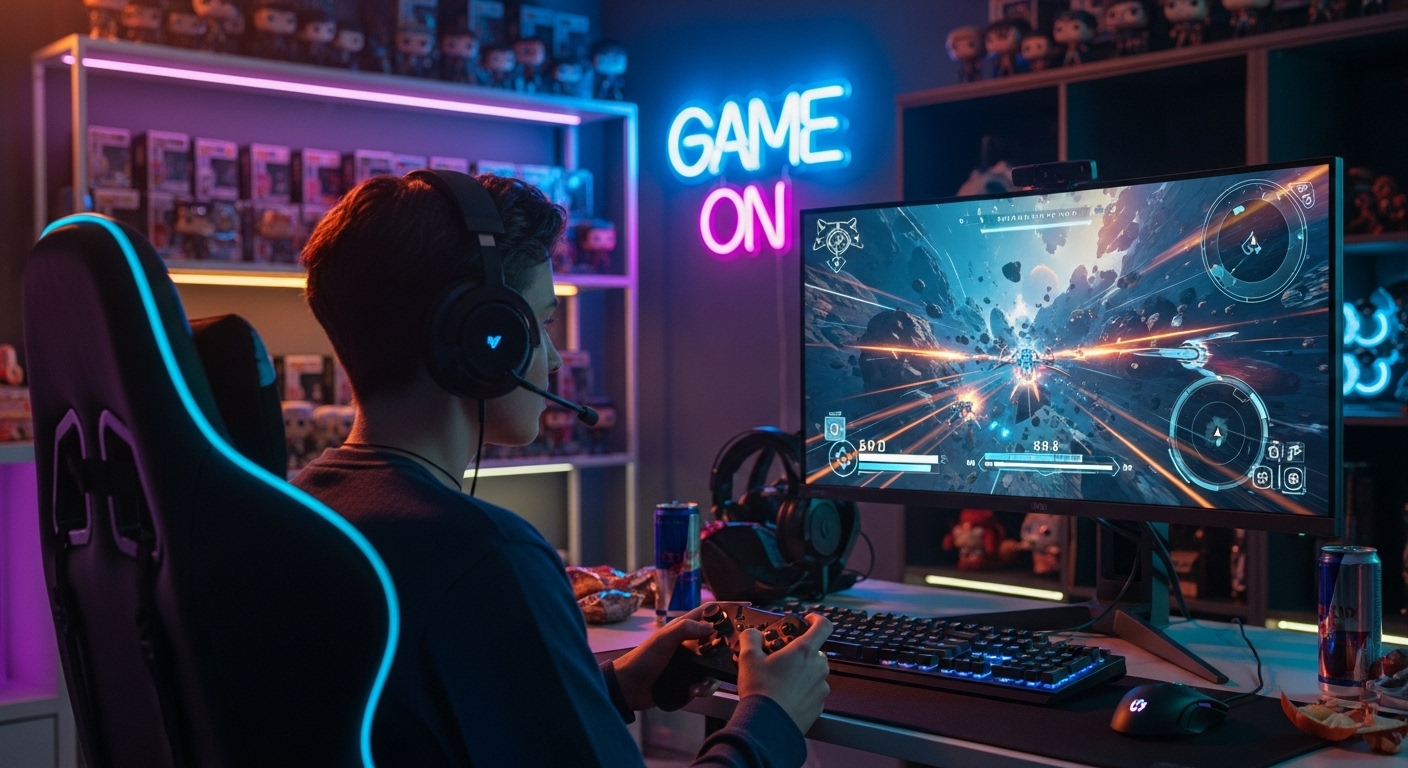
Gaming has evolved dramatically over the decades, transforming from simple pixelated screens into vast, immersive worlds that captivate millions of players worldwide. The journey of gaming is not just a story of technology but also of creativity, culture, and community. From the earliest arcade machines to the current generation of consoles and PC gaming, gaming has become one of the most influential forms of entertainment in human history.
The Early Days: Arcade Beginnings
The story of gaming begins in the 1970s and 1980s, during the golden age of arcade machines. Games like Pong and Space Invaders introduced the world to interactive entertainment in a public space. These games were simple by today’s standards but revolutionary at the time. Players would gather around cabinets, inserting coins to challenge themselves and others in high-score competitions.
Arcade games were not only a source of entertainment but also a cultural phenomenon. They shaped a generation’s understanding of video games as competitive, social experiences. With limited technology, developers had to focus on gameplay mechanics that were intuitive and challenging. This era laid the foundation for many genres still popular today, including shoot-em-ups, platformers, and racing games.
The Rise of Home Consoles
By the mid-1980s, gaming began moving from arcades into homes, thanks to the rise of home consoles like the Nintendo Entertainment System (NES) and the Sega Master System. These systems allowed players to enjoy games in the comfort of their own living rooms, changing the way people interacted with video games forever.
Home consoles expanded the possibilities of storytelling in games. Titles such as The Legend of Zelda and Super Mario Bros. introduced rich worlds and characters, encouraging exploration and creativity. The concept of saving progress and completing long-term goals transformed gaming from short bursts of arcade fun into prolonged adventures. This era also marked the beginning of franchise culture in gaming, with characters becoming icons recognized even outside the gaming community.
The PC Gaming Revolution
Parallel to the rise of consoles, personal computers became a hub for gaming innovation. PC gaming offered a different experience, with games often featuring more complex mechanics and richer graphics than their console counterparts. Titles like Doom, Warcraft, and SimCity showcased the potential of PCs as powerful gaming machines, capable of hosting expansive worlds and multiplayer experiences.
The PC also became a platform for modding, allowing players to modify games and create entirely new experiences. This community-driven innovation has had a lasting impact, giving rise to some of the most beloved games in history and even influencing professional game development.
The Birth of Multiplayer and Online Gaming
One of the most transformative developments in gaming has been the rise of multiplayer and online experiences. Games like Quake and StarCraft pioneered competitive online play, while massively multiplayer online games (MMOs) like World of Warcraft created persistent virtual worlds where players could interact, compete, and cooperate on a global scale.
Online gaming revolutionized the social aspect of gaming. It connected people across continents, forming communities and friendships that transcended physical boundaries. Multiplayer experiences also introduced new challenges and strategies, encouraging teamwork and competition on unprecedented levels. The rise of esports is a direct result of this online gaming revolution, turning players into professional athletes and gaming into a spectator sport.
The Mobile Gaming Explosion
The late 2000s brought gaming to the palms of our hands. Smartphones became ubiquitous, and with them came a new era of mobile gaming. Titles like Angry Birds, Candy Crush, and Pokémon Go made gaming accessible to everyone, breaking down barriers of age, skill, and experience.
Mobile gaming transformed how people perceive and interact with games. Short, engaging sessions became popular, encouraging casual play while still offering depth for those seeking more complexity. Mobile platforms also introduced innovative monetization models, from in-app purchases to subscription services, shaping the modern gaming economy.
The Art of Storytelling in Games
Gaming is no longer just about mechanics and competition; it has evolved into a powerful storytelling medium. Modern games often feature intricate narratives, rich characters, and emotional depth. Titles like The Last of Us, Red Dead Redemption, and The Witcher 3 are celebrated not only for their gameplay but for their storytelling prowess.
Video games allow players to inhabit a world and make choices that affect the narrative, creating an immersive experience unique to this medium. Unlike films or books, games give players agency, making them active participants in the unfolding story. This interactive storytelling opens the door to empathy, moral reflection, and emotional engagement in ways no other medium can achieve.
The Technological Advancements Driving Modern Gaming
Modern gaming owes its evolution to relentless technological innovation. Graphics engines, physics simulations, AI, and real-time rendering have all contributed to more immersive experiences. High-definition visuals, ray tracing, and realistic physics allow developers to create worlds that feel alive, while AI-driven characters provide dynamic interactions that enhance gameplay.
Virtual reality (VR) and augmented reality (AR) have further pushed the boundaries, offering experiences that were once considered science fiction. Players can now step directly into game worlds, experiencing scale, perspective, and interaction in entirely new ways. As technology continues to advance, the line between reality and gaming is becoming increasingly blurred.
Gaming as a Cultural Phenomenon
Gaming is no longer a niche hobby; it has become a cultural powerhouse. Video games influence fashion, music, films, and even social movements. Cosplay, conventions, and streaming communities showcase the cultural impact of gaming, bringing together millions of fans worldwide.
Streaming platforms and content creation have also turned gaming into a form of entertainment beyond playing. Gamers now share their experiences with audiences, creating communities built around shared passions and interactive engagement. This cultural integration has made gaming an essential part of modern entertainment.
The Future of Gaming
Looking forward, the future of gaming is filled with exciting possibilities. Cloud gaming, AI-generated content, and adaptive experiences promise to make gaming more accessible and personalized. Virtual worlds could become more immersive than ever, offering experiences that blend reality with imagination seamlessly.
The continued expansion of esports and competitive gaming indicates that gaming will only grow as a professional and spectator activity. Meanwhile, inclusivity and accessibility are becoming central to game design, ensuring that gaming can be enjoyed by people of all abilities and backgrounds.
Conclusion
Gaming has come a long way from its humble beginnings in arcades and home consoles. It has transformed into a sophisticated, immersive, and culturally significant medium that touches the lives of millions around the globe. With advancements in technology, storytelling, and social connectivity, gaming continues to evolve, pushing boundaries and creating experiences that were once unimaginable.
Whether you are a casual player enjoying a mobile game during a commute or a competitive gamer striving for esports glory, gaming offers a world of possibilities. It is a celebration of creativity, technology, and human connection, proving that video games are more than just entertainment—they are an integral part of modern life.