
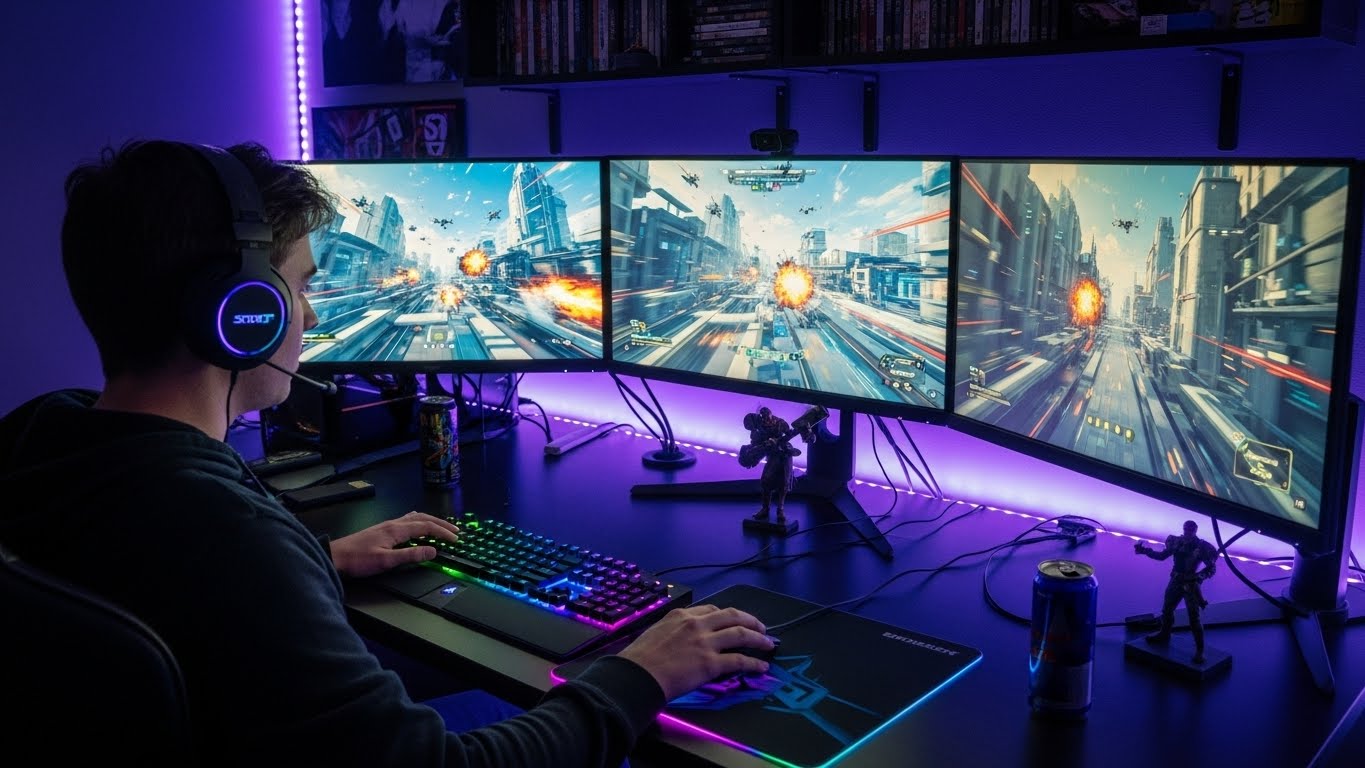
Introduction: A New Era of Interactive Worlds
Gaming has evolved far beyond its early origins, transforming from simple pixelated screens into expansive digital universes filled with complex characters, immersive stories, and cutting-edge technology. What was once viewed as a niche hobby has grown into a global cultural force, influencing entertainment, sports, social dynamics, and even education. Today, gaming is not just about playing for fun; it is a lifestyle, a growing profession, and a powerful engine driving new technological innovation. This blog dives into how gaming has become such an integral part of modern life, exploring its evolution, its impact, and what the future might hold.
The Evolution of Gaming: From Arcades to Virtual Realms
The earliest games were simple exercises in digital interaction, designed mostly for experimentation and entertainment in laboratories and hobbyist circles. As technology advanced, arcades brought gaming into public spaces, turning it into a shared experience. Consoles like early home entertainment systems shifted gameplay into living rooms, allowing gamers to enjoy their favorite titles with family and friends.
Fast forward to today, and we have hyper-realistic 3D graphics, online multiplayer ecosystems, and cloud-based platforms that allow streaming games from anywhere. The evolution highlights a remarkable journey from simplicity to sophistication. Modern games blend art and engineering, storytelling and strategy, offering players deeply engaging experiences that older generations could hardly have imagined.
The Rise of Esports and Competitive Play
Competitive gaming, or esports, has transformed gaming into a global spectacle. Tournaments draw millions of viewers, rivaling traditional sports in popularity. Professional players train rigorously, analyze gameplay footage, and participate in tournaments with substantial prize pools.
Beyond the financial incentives, esports has helped redefine what it means to be an athlete. The mental coordination, strategy, and reaction speed required to excel at high levels demonstrate extraordinary skill. This competitive scene has opened doors for sponsorships, coaching careers, streaming opportunities, and even academic scholarships. Esports is no longer just something people watch for fun; it is a legitimate field of professional achievement.
Gaming and Social Interaction: Connecting Across Worlds
One of the most transformative aspects of modern gaming is its ability to bring people together. Online multiplayer games, voice chat, and collaborative challenges allow players to interact with others across different countries and cultures. Many lifelong friendships have been formed inside digital worlds.
Gaming also provides a unique social comfort zone for those who may feel anxious in face-to-face interactions. In virtual environments, players can communicate at their own pace and express themselves through customizable characters or avatars. The social aspect of gaming helps build teamwork, leadership, and communication skills while offering a sense of belonging.
Gaming as a Storytelling Medium
Modern gaming rivals books and films in narrative depth. Developers craft intricate worlds, complex characters, and emotionally engaging storylines that allow players to feel deeply connected to the experience. Unlike passive forms of entertainment, games give players control over decisions that shape the outcome of the story.
This interactivity creates a powerful emotional bond. Whether exploring mysterious lands, solving challenging puzzles, or making morally difficult choices, players feel like active participants rather than observers. Gaming as a storytelling medium continues to grow, pushing boundaries and offering narratives that resonate with diverse audiences.
Technology Behind the Magic: What Powers Modern Games
Behind every modern game lies a combination of cutting-edge technology. High-performance graphics engines create lifelike environments, while sophisticated physics engines allow realistic movement and interaction. Artificial intelligence enhances gameplay by enabling characters to adapt to player actions, making the experience more dynamic and unpredictable.
The rise of cloud computing has also made gaming more accessible. Instead of relying on expensive hardware, players can stream high-quality games directly to their devices. This shift democratizes gaming, enabling more people to enjoy advanced experiences without technical barriers.
The Role of Mobile Gaming in Everyday Life
Mobile gaming has reshaped how and where we play. With smartphones becoming nearly universal, gaming has slipped seamlessly into daily routines. Whether during a commute, a lunch break, or a quiet evening at home, mobile games offer quick, convenient, and enjoyable experiences.
These games appeal to casual players who may not own a console or gaming PC, expanding the audience significantly. Their accessibility and variety have turned mobile gaming into one of the largest sectors of the industry. Some mobile titles even offer complex multiplayer environments or deep strategic gameplay, proving that mobile devices can deliver more than just simple pastimes.
Gaming and Mental Health: Both Benefits and Challenges
The connection between gaming and mental health is complex but significant. Studies have shown that gaming can improve cognitive skills, including problem-solving, hand-eye coordination, and strategic thinking. Games can also provide stress relief, serving as a mental escape from daily pressures. Cooperative games encourage empathy and teamwork, while certain titles are specifically designed to support mental well-being.
However, it is important to acknowledge potential challenges. Excessive gaming can interfere with responsibilities, social life, and sleep if not managed properly. Moderation and balance are key to enjoying the benefits while avoiding negative impacts. When approached mindfully, gaming can be a positive and even therapeutic experience.
The Creative Side of Gaming: A Playground for Imagination
Gaming does not only entertain; it inspires creativity. Many games allow players to design their own worlds, create characters, build structures, or craft unique items. Sandbox and simulation games, in particular, encourage experimentation and imagination.
Beyond the games themselves, the industry has inspired countless creators. Artists, writers, designers, musicians, and programmers contribute to the making of games, forming a vibrant creative ecosystem. Fans also contribute through fan art, mods, custom content, and online communities. This creative energy makes gaming one of the most inspiring forms of modern entertainment.
Streaming and Content Creation: A New Kind of Stardom
The rise of streaming platforms has introduced a new era of digital stardom. Gamers can now broadcast their gameplay, share tips, entertain audiences, and build loyal communities. Streaming is more than just playing games—it blends performance, strategy, and personality.
For many, content creation has become a sustainable career. Streamers engage with global audiences, host live events, and collaborate with brands. They shape gaming culture, influence trends, and provide entertainment that feels personal and interactive. This new medium demonstrates how gaming has expanded beyond traditional boundaries.
The Educational Potential of Gaming
In recent years, educators have recognized the value of using games as learning tools. Certain games teach problem-solving, coding, math, language skills, and even history. By turning learning into an interactive experience, games help students stay engaged and motivated.
The concept of gamification has also influenced workplaces and training environments. Incorporating game-like elements into educational activities increases participation and satisfaction. Gaming’s ability to merge fun with learning shows its potential to revolutionize traditional methods of instruction.
Virtual Reality and the Future of Immersive Play
Virtual reality is one of the most exciting advancements in gaming technology. VR headsets transport players into fully immersive worlds where they can move, explore, and interact using natural gestures. The sense of presence creates unparalleled immersion, making the experience more vivid and lifelike.
As VR technology improves, we can expect even more realistic graphics, smoother motion tracking, and deeper sensory integration. Augmented reality also offers exciting potential by merging digital elements with the real world. These innovations suggest that the future of gaming will feel more interactive, dynamic, and magical.
Conclusion: The Ever-Expanding Universe of Gaming
Gaming has become one of the most influential cultural and technological forces of our time. It brings people together, fosters creativity, enables competitive careers, and pushes the boundaries of technological innovation. Whether you are a casual player, a dedicated competitor, or someone who simply appreciates the artistry behind modern games, there is no denying the profound impact gaming has on our digital world.
As technology continues to advance, the possibilities for gaming will only expand further. New stories will be told, new worlds will be created, and new communities will form. Gaming is not just a hobby—it is a dynamic, evolving universe that continues to redefine entertainment and shape the future.