Gaming has evolved significantly over the past few decades, with new technologies, genres, and ideas continually reshaping the way we play. From simple 2D pixel games to hyper-realistic virtual worlds, gaming has progressed at an astonishing rate. But where is the industry headed next? With the rapid growth of new technologies, changing player preferences, and the increasing impact of gaming culture on mainstream entertainment, the future of gaming looks incredibly exciting. In this blog post, we will dive deep into some of the most transformative trends shaping the gaming industry today and explore what we can expect in the years to come.
The Rise of Cloud Gaming
One of the most significant shifts in gaming over the last few years is the rise of cloud gaming. While the concept of playing games via the cloud isn’t entirely new, recent advancements in internet infrastructure, streaming technology, and server performance have made it more accessible and viable than ever before. Cloud gaming allows players to stream video games on various devices, eliminating the need for expensive gaming consoles or high-end PCs. This means players can access high-quality games on smartphones, tablets, smart TVs, or even low-spec computers.
Major platforms like Google Stadia, Microsoft’s Xbox Cloud Gaming (formerly known as Project xCloud), and NVIDIA’s GeForce Now have brought cloud gaming into the spotlight. This new form of gaming offers several key advantages. First, it democratizes access to high-end gaming experiences by allowing people to play graphically demanding games without needing a powerful machine. Second, it eliminates the hassle of downloading and installing large game files, reducing the barriers to entry for new players.
Despite its potential, cloud gaming still faces challenges. A reliable and fast internet connection is required for smooth gameplay, and latency can be an issue, especially in fast-paced games where responsiveness is key. However, as internet infrastructure improves and 5G networks become more widespread, cloud gaming has the potential to revolutionize how we access and experience games.
Virtual Reality (VR) and Augmented Reality (AR): The New Frontier
Virtual Reality (VR) and Augmented Reality (AR) are two of the most exciting and innovative technologies making waves in the gaming industry. These technologies allow players to interact with virtual environments in new and immersive ways, taking gaming to a whole new level of realism and interactivity.
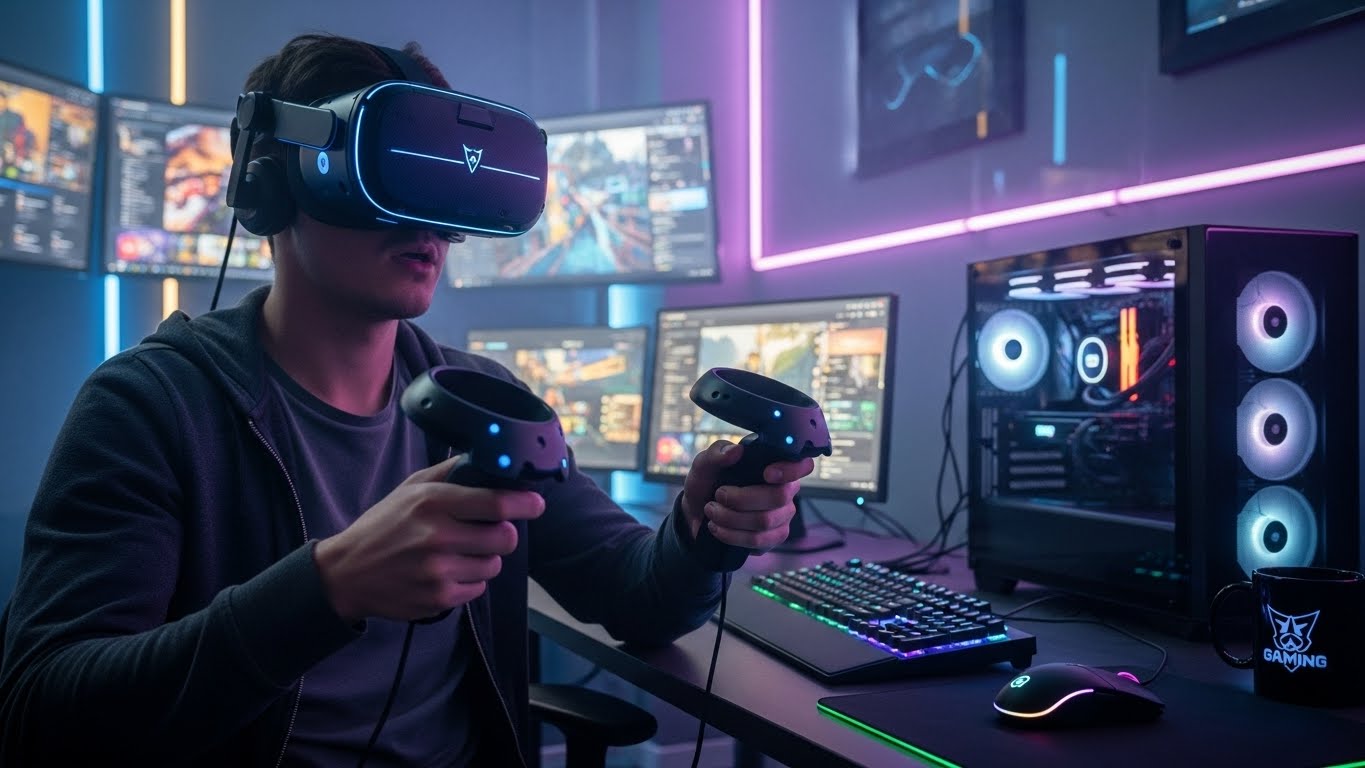
VR gaming has come a long way since its early days, with headsets like the Oculus Quest 2, PlayStation VR, and HTC Vive providing players with fully immersive experiences. With VR, players can step inside a game, experiencing it from a first-person perspective with 360-degree views and a sense of presence that traditional gaming can’t replicate. VR is particularly effective in genres like action, exploration, and simulation, where immersion enhances the player’s emotional connection to the game world.
Meanwhile, AR is taking a different approach, blending the virtual world with the real one. Pokémon GO, for instance, brought AR gaming to the masses, allowing players to interact with virtual creatures overlaid onto real-world environments. AR’s potential goes beyond mobile games, though. In the future, we could see AR integrated into console and PC gaming experiences, enabling players to interact with virtual objects and characters in their physical space.
Although VR and AR gaming are still in their early stages, both technologies are poised to play a significant role in the future of gaming. As the hardware becomes more affordable and accessible, and as the content continues to improve, we can expect VR and AR to offer even more compelling experiences for players.
The Explosion of Indie Games
In recent years, indie games have become a dominant force in the gaming industry. Independent developers, freed from the constraints of big-budget publishers, are creating innovative and experimental games that often push the boundaries of what gaming can be. With platforms like Steam, itch.io, and the Epic Games Store, indie developers have access to a wider audience than ever before, and players are increasingly seeking out these unique, smaller-scale titles.
Indie games are known for their creativity and willingness to take risks, exploring unconventional narratives, gameplay mechanics, and art styles. Titles like Hades, Hollow Knight, Celeste, and Undertale have not only achieved critical and commercial success but have also garnered passionate fan bases. These games often emphasize creativity over technical perfection, offering experiences that feel fresh and personal.
One of the key advantages of indie games is their ability to experiment with unconventional ideas. Whether it’s a narrative structure that challenges traditional storytelling, unique gameplay mechanics that subvert genre expectations, or hand-drawn art styles that stand apart from the hyper-realistic graphics of mainstream games, indie developers are constantly pushing the envelope. As more talented creators enter the space, the indie scene is likely to continue flourishing, providing players with a diverse range of experiences that wouldn’t be possible within the confines of traditional AAA game development.
Evolving Game Narratives and Storytelling
Storytelling in video games has come a long way, evolving from simple plots to complex narratives that rival those of movies and novels. As technology advances and game design becomes more sophisticated, the way stories are told in games is also evolving. In the past, many games featured linear stories with fixed outcomes, but modern games are embracing branching narratives, multiple endings, and player-driven stories.
Games like The Witcher 3: Wild Hunt, Detroit: Become Human, and Cyberpunk 2077 have pushed the boundaries of interactive storytelling. Players can make decisions that significantly impact the course of the narrative, leading to multiple storylines, character arcs, and outcomes. This interactivity allows players to feel more invested in the game world, as their choices shape the fate of the characters and the world itself.
Narrative design is also becoming more nuanced, with developers exploring themes of identity, morality, and social issues. Titles like Life is Strange and The Last of Us have received widespread acclaim for their emotionally charged stories, exploring topics such as mental health, loss, and societal struggles. As storytelling techniques continue to improve, games are becoming more capable of offering rich, thought-provoking narratives that resonate with players on a deeper level.
Moreover, the rise of procedural generation is also changing the way stories are told. Games like No Man’s Sky and Minecraft use algorithms to create vast, dynamic worlds where no two players’ experiences are exactly the same. This approach allows for an infinite number of potential stories to emerge, giving players the freedom to create their own narratives within the game world.
The Increasing Popularity of Esports
Esports, or competitive video gaming, has exploded in popularity over the past decade. What started as a niche subculture has become a global phenomenon, with millions of players and viewers worldwide. Games like League of Legends, Counter-Strike: Global Offensive, Dota 2, and Fortnite have become staples of the esports scene, attracting massive prize pools, sponsorship deals, and media attention.
The growth of esports is also being supported by the rise of streaming platforms like Twitch and YouTube Gaming, where players can watch live streams of professional gaming tournaments, interact with their favorite streamers, and even compete themselves. As esports continues to gain mainstream acceptance, it’s not just about the players and viewers—it’s also creating career opportunities in areas like game development, marketing, and broadcasting.
The rise of esports has led to the creation of professional leagues, dedicated arenas, and a whole ecosystem of events that resemble traditional sports leagues in structure and organization. With games like Overwatch and Call of Duty establishing formal competitive leagues, esports is solidifying its place as a legitimate form of entertainment.
Looking to the future, we can expect esports to become even more integrated into the fabric of gaming culture, with potential growth in viewership, sponsorship, and global reach. As esports continues to develop, it’s likely that it will become an even bigger part of the gaming experience, attracting a broader audience and fostering a new generation of professional gamers.
The Metaverse and Its Potential for Gaming
The concept of the “metaverse” has been gaining traction as the next big thing in the digital world. The metaverse refers to a virtual universe where people can interact with one another and digital environments in real time. While the metaverse is still in its infancy, companies like Facebook (now Meta) and Epic Games are investing heavily in creating interconnected virtual worlds.
In the context of gaming, the metaverse has the potential to create a seamless experience where players can interact across different games, platforms, and virtual environments. Imagine a world where your character from Fortnite could meet up with a friend from Minecraft, or where virtual concerts, events, and social gatherings could take place within a game’s environment. This idea of a shared digital space that transcends individual games is an exciting prospect for the future of gaming.
Although we’re not there yet, the metaverse represents a bold vision for the future, where gaming becomes just one part of a larger, interconnected virtual experience. As virtual reality, augmented reality, and cloud computing continue to evolve, the metaverse could become a game-changing platform that completely redefines how we interact with digital worlds and with each other.
Conclusion: The Future is Bright for Gamers
The future of gaming is incredibly exciting, with emerging technologies, creative innovations, and new ways of experiencing games transforming the industry. From cloud gaming and virtual reality to the rise of indie games and evolving narratives, the gaming landscape is in a constant state of flux. As new trends continue to emerge, players will have access to more immersive, creative, and interactive experiences than ever before.
As gaming continues to grow and evolve, it’s clear that the future holds endless possibilities for both players and developers. Whether you’re a casual gamer or a dedicated esports enthusiast, one thing is certain: the next decade of gaming will be nothing short of extraordinary.