
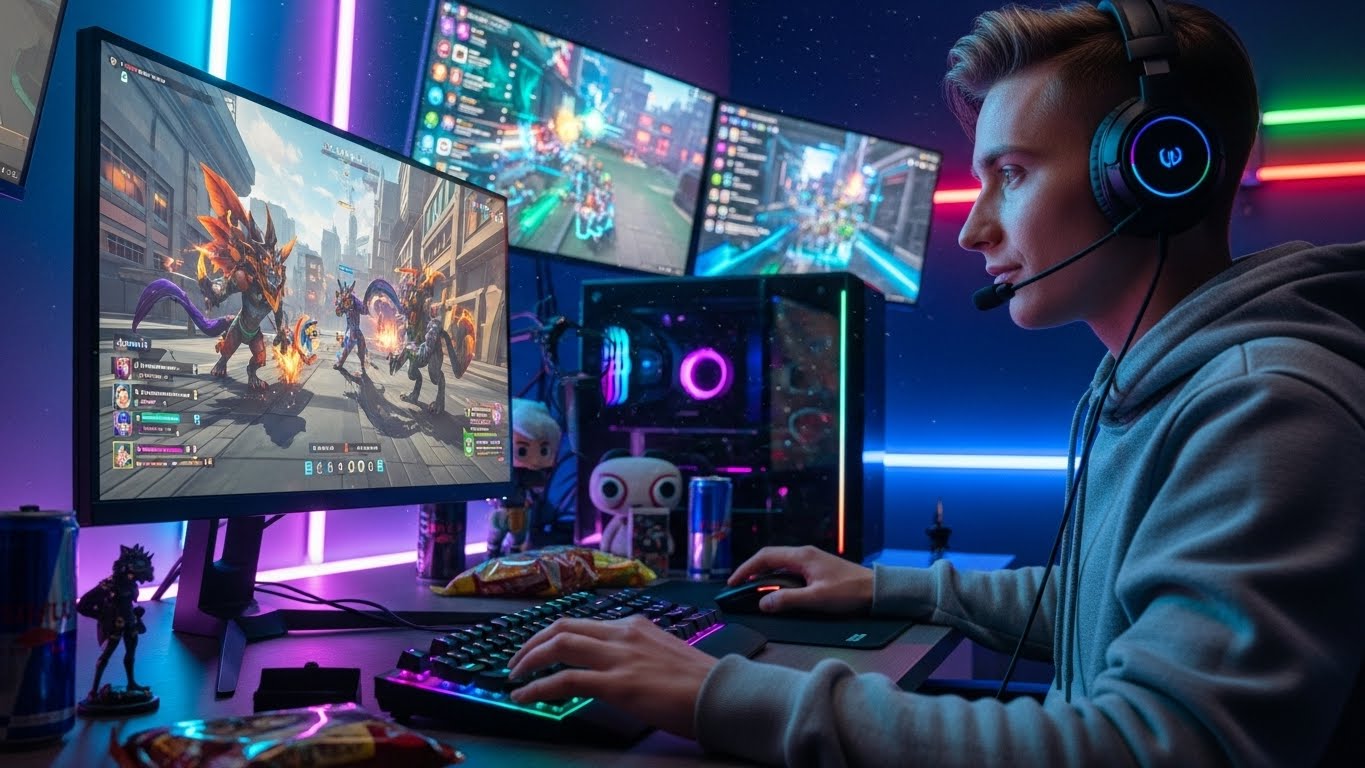
Gaming has long since evolved from a simple pastime to a multi-billion-dollar industry and a global cultural phenomenon. Whether you are a casual player indulging in a few rounds of your favorite mobile game or a hardcore enthusiast immersed in open-world adventures, gaming has something for everyone. As we look back at its history, it’s fascinating to see how technology, creativity, and innovation have shaped this entertainment form. From pixelated screens to virtual realities, the gaming experience has come a long way. In this blog post, we will explore the history of gaming, its impact on society, and where the future of gaming is headed.
The Early Days of Gaming: Arcade Machines and Home Consoles
The origin of modern video gaming can be traced back to the 1970s, when arcade machines began to dominate entertainment spaces. Early titles like Pong and Space Invaders were simple yet revolutionary in their design, offering a form of entertainment that was unlike anything seen before. These games, with their pixelated graphics and minimalistic sound effects, were the precursors to the vibrant and intricate games of today.
Arcades were the place to be, and the competition to get the highest score became a popular social activity. However, as the 1980s approached, the concept of gaming expanded with the advent of home consoles. The Atari 2600, released in 1977, marked a significant shift, allowing players to experience video games in their own homes. The availability of home consoles made gaming more accessible, and soon, titles like Pac-Man, Donkey Kong, and Asteroids became household names.
The Rise of 3D Graphics and the 1990s Gaming Boom
The 1990s were a transformative decade for the gaming industry. The introduction of 3D graphics completely revolutionized how games were played and experienced. Systems like the Sony PlayStation, Nintendo 64, and Sega Saturn brought players into fully realized 3D environments, where they could explore new worlds in unprecedented ways.
Titles such as Super Mario 64, The Legend of Zelda: Ocarina of Time, and Final Fantasy VII were not just games, they were experiences. The leap to 3D allowed for more complex storytelling, larger game worlds, and more intricate gameplay mechanics. Characters became more detailed, and the emotions conveyed through gameplay began to have a lasting impact on players. The 1990s also saw the rise of multiplayer gaming with the development of networked games like Quake and Warcraft, which laid the groundwork for the online gaming experiences we enjoy today.
As technology advanced, the PlayStation 2, Xbox, and GameCube introduced better hardware, better graphics, and even more immersive gaming experiences. The PS2, in particular, became one of the best-selling consoles of all time, with a library of games that defined the era. Franchise like Grand Theft Auto, Metal Gear Solid, and Tekken were essential to the success of the system and gaming as a whole.
The Impact of Online Multiplayer and eSports
The early 2000s saw the rise of online gaming, a development that would forever change the landscape of video games. The idea of playing with or against people from around the world was both thrilling and revolutionary. Titles like Halo 2 on the Xbox and World of Warcraft on PC brought multiplayer gaming into the mainstream. Now, players didn’t have to leave their homes to engage in competitive or cooperative gameplay, and the concept of online communities began to flourish.
The rapid expansion of the internet made it easier for developers to create massive multiplayer experiences. Games like Counter-Strike, League of Legends, and Dota 2 created communities that continue to thrive today. These games weren’t just fun; they became competitive platforms for professional eSports players to showcase their skills. The rise of eSports saw the formation of leagues, tournaments, and even college scholarships for gamers, turning gaming into a legitimate career path for some.
Not only did online multiplayer games become a social platform for friends to hang out, but they also attracted millions of viewers via streaming platforms like Twitch, where players and viewers alike could enjoy live broadcasts of professional competitions. These streams grew into their own form of entertainment, bridging the gap between competitive gaming and the mainstream entertainment industry.
The Age of Mobile Gaming
The next major milestone in gaming came with the widespread adoption of smartphones. The launch of the iPhone in 2007 revolutionized mobile gaming by offering powerful hardware capable of running high-quality games. This opened the floodgates for an entirely new generation of mobile games, many of which became global phenomena.
Games like Angry Birds, Candy Crush, and Clash of Clans were simple, easy to pick up, and incredibly addictive. With mobile phones in the hands of billions of people worldwide, games on mobile devices democratized gaming, making it more accessible than ever before. Casual gaming became a dominant force, and for the first time, gaming wasn’t limited to a specific demographic or platform.
Mobile gaming also paved the way for new business models, such as microtransactions and free-to-play games, allowing developers to monetize their products in innovative ways. These new revenue streams opened up the industry to a wider variety of creators, making the gaming world even more diverse.
Virtual Reality: The Next Frontier of Gaming
Looking forward, one of the most exciting developments in the world of gaming is the growth of virtual reality (VR). Virtual reality promises to take gaming to an entirely new level by immersing players in fully realized, 360-degree environments. Headsets like the Oculus Rift, HTC Vive, and PlayStation VR are making it possible for players to step inside their favorite games, creating experiences that are more immersive and lifelike than ever before.
While VR gaming is still in its early stages, its potential is enormous. Games like Beat Saber, Half-Life: Alyx, and The Walking Dead: Saints & Sinners have demonstrated what is possible in VR, and developers are continuously pushing the boundaries of what VR can do. Not only does VR make gaming more immersive, but it also introduces new types of gameplay that weren’t possible with traditional controls.
The development of haptic feedback technology, which simulates the sensation of touch, will also play a huge role in making VR gaming even more lifelike. As the hardware continues to improve and become more affordable, we can expect VR to become a mainstream way of experiencing games in the near future.
The Future of Gaming: AI, Cloud Gaming, and Beyond
As we look to the future, there are several exciting trends shaping the next era of gaming. One of the most promising developments is the rise of artificial intelligence (AI) in video games. AI has the potential to create dynamic, responsive environments where NPCs (non-playable characters) behave more like real people, reacting to the player’s actions in more realistic and unpredictable ways.
Cloud gaming is another trend to watch. Services like Google Stadia (despite its eventual closure), Nvidia GeForce Now, and Xbox Cloud Gaming are changing the way we think about gaming hardware. With cloud gaming, players can stream games directly from servers, removing the need for expensive consoles or PCs. All you need is a stable internet connection and a device to play on.
Cloud gaming could open up gaming to a wider audience by lowering the barrier to entry. Additionally, it could make games more accessible on mobile devices, allowing people to play AAA titles wherever they are, without needing specialized hardware.
Conclusion: The Unstoppable Rise of Gaming
The gaming industry has come a long way since its humble beginnings in the arcades of the 1970s. Today, it stands as one of the most influential and profitable entertainment sectors in the world, and it shows no signs of slowing down. The evolution of gaming technology, from 2D pixels to 3D worlds and now to virtual reality, has transformed the way we experience and interact with video games.
As gaming continues to grow and evolve, it’s clear that it will remain a central part of global culture for years to come. Whether it’s through esports, mobile gaming, VR experiences, or AI-driven gameplay, the future of gaming is an exciting one. And for those of us who love to play, it’s an adventure that will only get more immersive, innovative, and exhilarating with each passing year.
In the end, gaming is not just about playing—it’s about experiencing new worlds, telling compelling stories, and connecting with others in meaningful ways. It’s an art form, an industry, and a community that brings people together, regardless of age, location, or background. The evolution of gaming is far from over, and the best is yet to come.