
Introduction
Gaming has transformed from a simple pastime into one of the most influential and dynamic industries in the modern world. What began as a set of blinking pixels on bulky arcade machines has evolved into an expansive digital universe that connects millions of players across continents. The gaming world is no longer confined to a niche hobby for a select group of enthusiasts—it is now a multi-billion-dollar global phenomenon influencing culture, technology, education, and even mental health.
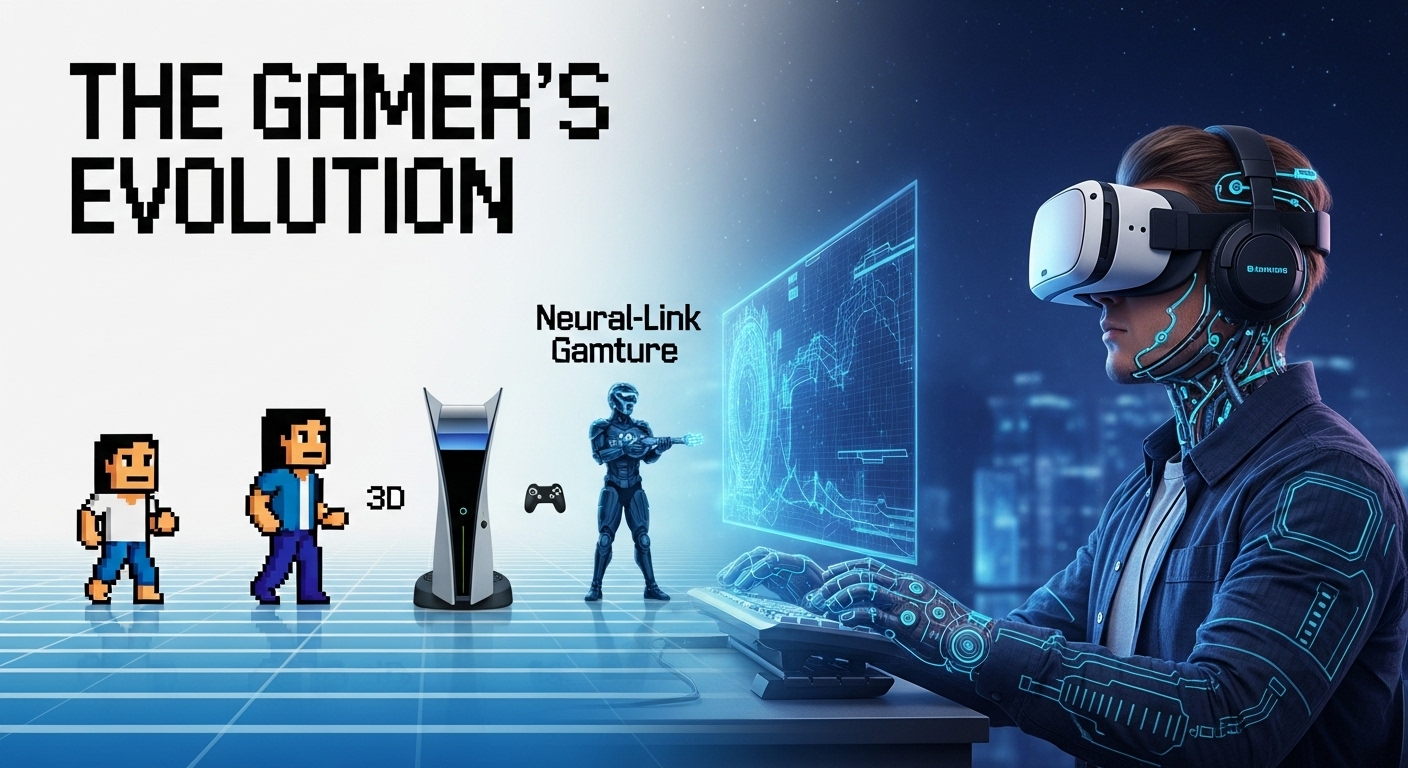
The story of gaming is not just about entertainment; it is a story of creativity, innovation, and the human desire to explore new forms of interaction. Every generation has witnessed a transformation in how games are made, played, and perceived. From the earliest consoles to immersive virtual reality, gaming continues to evolve, reflecting the pulse of our rapidly changing technological world.
The Early Days of Gaming
The origins of gaming can be traced back to the 1950s and 1960s, when scientists and engineers experimented with computers and created simple electronic games. One of the first recognizable video games was “Tennis for Two,” developed in 1958 by physicist William Higinbotham. Although it was a rudimentary simulation, it sparked a new kind of curiosity: what if computers could be used not just for calculations, but for fun?
The 1970s brought the golden era of arcade gaming. Titles like Pong, Space Invaders, and Pac-Man became cultural landmarks. Arcades became social hubs where players gathered to test their reflexes and compete for high scores. The introduction of home consoles like the Atari 2600 in 1977 allowed people to bring the arcade experience into their living rooms. Gaming was no longer confined to arcades—it had entered the household.
This era laid the foundation for what gaming would become: a shared experience, a form of storytelling, and a new medium for creativity.
The Rise of Consoles and the Battle for the Living Room
The 1980s and 1990s were defined by the rise of console wars. Companies like Nintendo, Sega, and later Sony revolutionized gaming by pushing both hardware and software boundaries. The introduction of Nintendo Entertainment System (NES) in 1985 revived a market that had crashed due to oversaturation and poor-quality games.
Iconic characters like Mario, Link, and Sonic the Hedgehog became household names. These mascots weren’t just part of the games—they represented entire eras of gaming culture. The 16-bit wars between the Sega Genesis and Super Nintendo Entertainment System (SNES) created intense rivalries among fans and drove innovation in gameplay, sound, and graphics.
By the late 1990s, Sony’s PlayStation emerged, offering a new kind of experience through 3D graphics and cinematic storytelling. Games like Final Fantasy VII and Metal Gear Solid pushed the boundaries of narrative depth, proving that video games could tell complex, emotionally resonant stories comparable to films or novels.
The Birth of PC Gaming and Online Connectivity
While consoles dominated living rooms, personal computers opened another frontier for gaming. PC gaming allowed for a different kind of creativity and community involvement. Players could modify games, create their own maps, or design entire new experiences through mods. Classic titles like Doom, Quake, and StarCraft not only set benchmarks for technical innovation but also pioneered online multiplayer experiences.
The internet became the bridge that connected gamers worldwide. The late 1990s and early 2000s marked the rise of online multiplayer games, such as Counter-Strike and World of Warcraft. These titles transformed gaming from an individual activity into a social experience. Clans, guilds, and online friendships formed—some lasting for decades.
This online shift also introduced the concept of competitive gaming. Esports began to emerge from grassroots tournaments, evolving into professional competitions watched by millions. What started as small LAN parties soon turned into massive arenas filled with cheering fans and million-dollar prize pools.
The Age of Realism: Graphics, Physics, and Immersion
As technology advanced, the line between the virtual and real began to blur. The 2000s ushered in an era of unprecedented graphical fidelity and realism. Powerful consoles like the PlayStation 2, Xbox, and GameCube brought cinematic visuals and expansive worlds into homes. Games like Grand Theft Auto III, Halo, and The Legend of Zelda: The Wind Waker demonstrated how diverse and immersive gaming could become.
Developers began to focus not just on gameplay mechanics but also on storytelling, sound design, and emotional engagement. The arrival of high-definition graphics and motion capture technology allowed for lifelike animations and expressive characters. Titles like The Last of Us, Red Dead Redemption, and Uncharted showcased games as works of art, blending narrative, music, and visual design seamlessly.
This era also saw the rise of open-world gaming—a genre that allowed players to explore massive environments at their own pace. The sense of freedom and discovery in games like The Elder Scrolls V: Skyrim or Assassin’s Creed gave players control over their own stories, redefining what interactive entertainment could mean.
The Mobile Revolution
The arrival of smartphones in the late 2000s fundamentally changed how people interacted with games. Suddenly, gaming was in everyone’s pocket. Titles like Angry Birds, Candy Crush Saga, and Clash of Clans reached audiences that traditional consoles never could. Mobile gaming democratized the medium—anyone, regardless of age or background, could play.
While many dismissed mobile games as casual distractions, their impact was profound. The simplicity of mobile interfaces and accessibility encouraged millions of new players to join the gaming world. Mobile gaming became a multi-billion-dollar industry in its own right, rivaling and even surpassing traditional console revenues.
The rise of app stores also empowered independent developers to publish their creations directly, without relying on major publishers. This gave birth to a thriving indie game scene, bringing fresh creativity and experimentation to the medium.
The Age of Streaming and Cloud Gaming
In the 2010s, gaming entered another phase of transformation with the advent of streaming platforms and cloud gaming. Services like Twitch and YouTube Gaming allowed players to broadcast their gameplay to global audiences. This new wave of interactivity turned gaming into a form of entertainment to watch, not just to play.
Gaming influencers and streamers became modern celebrities, shaping trends, influencing game sales, and building loyal fan communities. The social aspect of gaming deepened—players were no longer isolated but part of an ever-expanding digital culture.
Cloud gaming further revolutionized accessibility. With services allowing games to be streamed without high-end hardware, gaming became more inclusive. Players could experience graphically demanding titles on low-powered devices, breaking down technological barriers.
The Rise of Virtual and Augmented Reality
As technology continued to evolve, the pursuit of immersion reached new heights with the introduction of Virtual Reality (VR) and Augmented Reality (AR). Headsets like Oculus Rift, HTC Vive, and PlayStation VR opened gateways to entirely new dimensions of interaction. In VR, players could step inside their favorite worlds—turning their heads to look around, reaching out to interact, and feeling the scale of virtual environments like never before.
Augmented Reality, on the other hand, brought the game into the real world. The success of Pokémon GO demonstrated the power of blending digital experiences with physical spaces. These technologies are still evolving, but their potential to redefine how humans interact with digital content is immense.
Gaming as an Art Form
Today, gaming is recognized as a legitimate art form. The blend of visuals, music, storytelling, and interactivity creates experiences that evoke genuine emotion and provoke thought. Games like Journey, Inside, and Hollow Knight showcase how minimalism and atmosphere can create profound emotional connections without the need for dialogue or complex narratives.
Independent developers have played a crucial role in pushing the artistic boundaries of gaming. Freed from corporate constraints, indie studios experiment with unconventional gameplay, unique art styles, and deeply personal stories. The result is a diverse ecosystem where creativity thrives.
Critics and scholars now analyze video games as cultural artifacts—expressions of human imagination that reflect social issues, identity, and philosophical questions. Gaming is no longer just entertainment; it is a platform for storytelling and artistic exploration.
The Social and Psychological Impact of Gaming
Gaming’s influence extends far beyond entertainment. It shapes how people learn, communicate, and perceive the world. Educational games are used in classrooms to teach subjects ranging from history to mathematics. Simulation games train pilots, surgeons, and engineers. Games improve problem-solving skills, enhance reflexes, and foster strategic thinking.
However, gaming also raises concerns. Issues like addiction, online toxicity, and excessive screen time have sparked debates about responsible gaming. It is crucial to recognize that, like any medium, games can have both positive and negative effects depending on how they are used.
Research has shown that moderate gaming can reduce stress, improve cognitive function, and foster social bonds. Multiplayer and cooperative games promote teamwork and communication. The key lies in balance—embracing the benefits while managing potential risks.
Diversity and Representation in Gaming
One of the most transformative shifts in modern gaming is the growing focus on diversity and inclusion. Historically, the industry often centered on a narrow demographic, but today’s gaming landscape is far more representative. Developers are creating stories that include people of different backgrounds, genders, cultures, and identities.
Representation matters, not just for inclusivity but for storytelling richness. When players see themselves reflected in games, it deepens the emotional connection and broadens the cultural reach of the medium. The push for more inclusive characters, narratives, and creators is reshaping how games are developed and experienced.
The Future of Gaming
The future of gaming is both exciting and unpredictable. Advances in artificial intelligence, quantum computing, and neural interfaces promise to push boundaries even further. AI-driven characters may soon respond to players in realistic, unscripted ways. Procedural generation could create infinite worlds that adapt to player behavior.
The metaverse concept—an interconnected digital universe where players can work, play, and socialize—is already taking shape. In such spaces, gaming will merge with everyday life, blurring the lines between virtual and real experiences.
Cross-platform play, digital ownership through blockchain, and user-generated content will redefine how games are created and shared. The future gamer might not just be a player but also a co-creator, shaping the very world they inhabit.
Gaming as a Cultural Powerhouse
Gaming is now a dominant force in global culture. Its influence is visible in movies, fashion, music, and even language. Game soundtracks are performed in orchestral concerts, and iconic characters are recognized worldwide. Major game releases rival Hollywood blockbusters in revenue and anticipation.
Esports continues to grow, drawing audiences larger than traditional sports events. Competitive gaming has become a legitimate career path for many, with dedicated training facilities, sponsorships, and global tournaments. Gaming conventions attract hundreds of thousands of fans who celebrate their shared passion through cosplay, art, and community events.
Gaming has also become a powerful storytelling medium for social commentary. Games now address issues such as climate change, mental health, and human rights, using interactivity to create empathy and awareness in ways other media cannot.
Conclusion
The evolution of gaming is one of the most remarkable technological and cultural journeys of the past century. From the simplicity of early arcade machines to the breathtaking realism of virtual reality, gaming has continuously reinvented itself. It has grown from a niche hobby into a universal language of creativity, competition, and connection.
Gaming’s power lies in its ability to immerse, inspire, and unite people. Whether played for fun, for learning, or for storytelling, games have become an integral part of human expression. As technology continues to advance, the potential for gaming to shape the future of entertainment, education, and social interaction is boundless.
The story of gaming is far from over—it is only entering its next chapter. And as it does, one thing is certain: gaming will continue to be not just a reflection of our world but a window into what the future can be.