
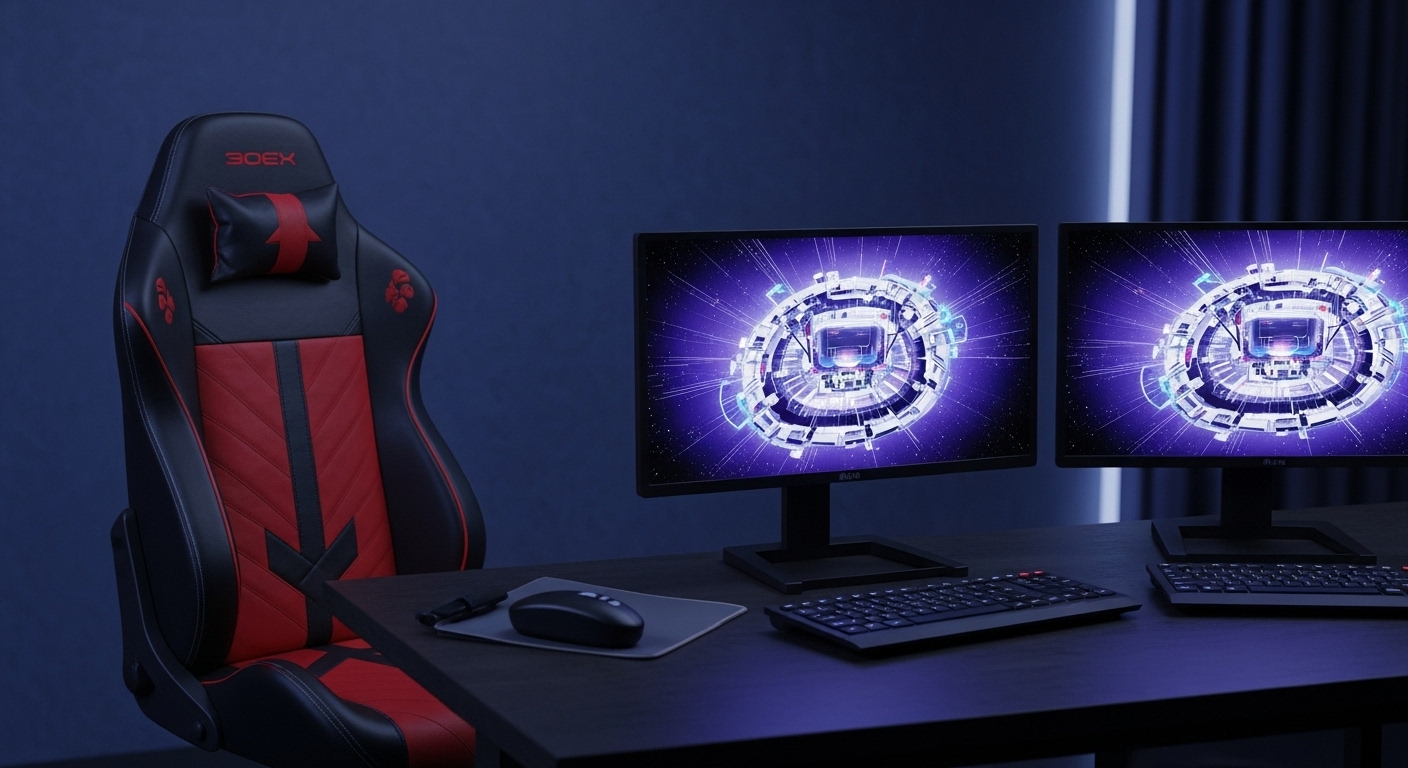
Gaming has evolved into a multi-billion-dollar industry that is one of the most dominant forms of entertainment worldwide. From its humble beginnings in arcades to the immersive worlds we experience today, video games have come a long way. This blog post will explore the origins, growth, technological innovations, and cultural impact of gaming, shedding light on its transformation and what the future holds for this ever-evolving medium.
The Genesis of Video Games: The Early Days
The origins of video games can be traced back to the late 1940s and early 1950s, where early experiments in electronic entertainment began. However, it wasn’t until the 1960s and 1970s that the first recognizable video games started to appear. One of the earliest examples of an interactive electronic game was Tennis for Two, created by physicist William Higinbotham in 1958. This simple game displayed on an oscilloscope featured two paddles, and players used the device to hit a ball back and forth—an early precursor to the iconic Pong.
In 1972, Pong became the first commercially successful arcade game, marking the official birth of the video game industry. Created by Atari co-founder Nolan Bushnell, Pong was a simple yet addictive game of digital table tennis. This success led to the opening of the first video game arcades, which became gathering places for gamers looking for entertainment and competition.
As arcade games gained popularity, home gaming systems began to take shape. Atari’s introduction of the Atari 2600 in 1977 marked the first major home gaming console, offering players the ability to play a variety of games at home using interchangeable cartridges. The 1980s saw an explosion of home consoles and arcade games, with Pac-Man, Donkey Kong, and Space Invaders becoming household names. These games laid the groundwork for what would become a global phenomenon.
The Golden Age of Gaming: The 1980s to 1990s
The 1980s ushered in the “golden age” of video gaming. During this period, arcade games saw massive popularity, and the industry rapidly expanded. The 1983 video game crash, however, temporarily halted the industry’s progress. Over-saturation of the market with poor-quality games and consoles led to a dramatic loss of consumer interest, resulting in the closure of many game companies.
Yet, the crash was not the end of video games; it was merely a setback. In 1985, Nintendo released the Nintendo Entertainment System (NES), revitalizing the gaming market. With iconic titles like Super Mario Bros., The Legend of Zelda, and Metroid, Nintendo set a new standard for game quality, storytelling, and gameplay. The NES introduced a new wave of games that were more engaging, featuring rich, colorful graphics and challenging mechanics.
The success of the NES sparked a race among companies to create new gaming consoles, each more advanced than the last. Sega entered the fray with the Sega Genesis in 1988, which became famous for titles like Sonic the Hedgehog and Streets of Rage. The rivalry between Sega and Nintendo during this time is often regarded as one of the most intense in gaming history, with each company pushing the boundaries of what was possible in gaming.
Meanwhile, the personal computer gaming scene also gained traction. Titles like Doom and Warcraft pushed the boundaries of immersive, first-person action games, establishing PC gaming as a legitimate and powerful force in the industry. This era also saw the development of early multiplayer games, which laid the foundation for online gaming in the years to come.
The Rise of 3D Gaming and CD-ROMs: The Late 1990s to Early 2000s
As the 1990s progressed, technology advanced to the point where games were no longer limited to 2D experiences. The introduction of 3D graphics and CD-ROM technology in the mid-1990s marked a transformative period for video games. The advent of fully 3D games allowed developers to create more expansive, immersive worlds that were previously impossible in earlier systems. This shift opened up new possibilities for game design and storytelling.
Sony’s release of the PlayStation in 1994 is one of the most significant milestones in this period. The PlayStation featured powerful hardware that allowed developers to create fully 3D environments, enabling games like Gran Turismo, Final Fantasy VII, and Metal Gear Solid to become instant classics. These titles offered expansive, interactive worlds and deep, cinematic storytelling, showing that video games were capable of delivering experiences similar to films.
Nintendo also followed suit with its Nintendo 64 in 1996. It introduced Super Mario 64, one of the most influential video games of all time. The game’s use of 3D environments and free-roaming camera controls marked a new era in platforming games and set a precedent for future 3D titles.
As the 3D gaming revolution continued, the industry began embracing CD-ROMs as the new standard for game distribution. This change allowed games to hold much larger amounts of data, resulting in more content, better graphics, and more immersive gameplay. Games like The Elder Scrolls III: Morrowind and Half-Life used this new technology to deliver experiences that were more expansive and detailed than anything that had come before.
The Age of Online Gaming: The 2000s and Beyond
With the turn of the century, online gaming began to emerge as a dominant force in the gaming world. The rise of broadband internet connections made it possible for players to connect with one another in real-time, competing or cooperating across vast virtual landscapes. Games like World of Warcraft and Counter-Strike brought online multiplayer gaming to the forefront, with millions of players worldwide connecting to share experiences, battle against each other, or complete cooperative missions.
The Xbox Live service, launched by Microsoft in 2002, marked a significant moment in the development of online gaming. For the first time, console gamers could access a reliable and expansive online network where they could communicate with others, join multiplayer matches, and download new content. The PlayStation 3 followed with its own online service, furthering the reach of online gaming.
The rise of online gaming not only transformed how people played but also how they interacted. Multiplayer games became hubs for social interaction, with players forming communities and friendships that often extended beyond the games themselves. The advent of MMOs (Massively Multiplayer Online games) such as World of Warcraft allowed players to immerse themselves in persistent virtual worlds, taking on roles, completing quests, and interacting with other players across the globe.
In the following years, online gaming would evolve even further, with the emergence of digital distribution platforms like Steam and the PlayStation Network. These platforms made it easier for players to access and download games directly, bypassing the need for physical media and opening up new possibilities for indie developers to reach global audiences. Digital sales became a major force, and the way people purchased and consumed games was forever changed.
The Emergence of Indie Games: Creative Freedom and Innovation
As the gaming industry continued to grow, a new wave of indie game developers emerged. These small, independent developers often worked with minimal budgets, yet their creativity and willingness to take risks led to some of the most innovative and beloved games of the 21st century. Indie games like Braid, Limbo, and Super Meat Boy challenged traditional gaming conventions and introduced players to unique gameplay mechanics and artistic styles.
The success of indie games can largely be attributed to the growth of digital distribution platforms. Steam, in particular, allowed indie developers to reach a vast audience without the need for traditional publishing deals. This democratization of game development opened the door for an explosion of creativity, as small studios and solo developers were able to share their visions with the world.
One of the most successful indie games, Minecraft, became a global phenomenon. Its simple yet incredibly deep mechanics allowed players to create virtually anything within its blocky world, leading to a dedicated fanbase and an enduring legacy. Other indie titles like Stardew Valley and Hollow Knight continue to prove that innovation, creativity, and passion can lead to enormous success, even without the backing of major studios.
The Role of Graphics and Technology in Modern Gaming
As the gaming industry continues to evolve, advancements in technology have played a critical role in pushing the boundaries of what’s possible in video games. The advent of powerful graphics processors (GPUs) has allowed games to feature realistic, high-resolution graphics that bring game worlds to life like never before. Games like Red Dead Redemption 2 and The Witcher 3 boast stunning visuals, with meticulously crafted landscapes, detailed character models, and lifelike animations.
In addition to graphical advancements, virtual reality (VR) and augmented reality (AR) technologies are beginning to transform the way we interact with games. With devices like the Oculus Rift and PlayStation VR, players can immerse themselves in fully realized virtual worlds. These technologies enable more physical interaction with games, allowing players to use hand controllers and even experience VR environments through their own movements.
Cloud gaming is another area of innovation, allowing players to stream games directly from powerful servers rather than relying on console hardware. Services like Google Stadia, Microsoft’s Xbox Cloud Gaming, and Nvidia GeForce Now are pushing the idea that the future of gaming may no longer require expensive hardware to enjoy the latest AAA titles.
The Cultural Impact of Gaming
Beyond entertainment, gaming has grown to become a significant part of global culture. Video games have influenced other forms of media, including movies, television, and music. Franchises like The Legend of Zelda, Halo, and Super Mario have become cultural icons, spawning movies, TV series, and merchandise.
The rise of esports has further elevated the cultural status of gaming. Professional gaming tournaments now attract millions of viewers, and players can earn substantial incomes from sponsorships, prize money, and streaming. Esports has turned competitive gaming into a global industry, with leagues and events held in stadiums and broadcast worldwide.
Gaming has also become a social activity, with online multiplayer games allowing players to connect with friends and strangers from across the globe. Many games have integrated social features such as voice chat, messaging, and in-game events, fostering a sense of community among players. The rise of game streaming platforms like Twitch has turned gaming into a spectator sport, with millions of viewers watching professional gamers or influencers as they play live.
Looking Ahead: The Future of Gaming
As we look to the future, it’s clear that the gaming industry will continue to evolve in exciting ways. Emerging technologies like artificial intelligence (AI), haptic feedback, and cloud gaming are poised to revolutionize how we experience games. As gaming becomes even more immersive and accessible, it’s likely that video games will continue to break down cultural barriers, create new forms of entertainment, and transform how we connect with one another.
The future of gaming also promises greater diversity, with more inclusive narratives and characters that reflect the wide range of cultures and identities found in the real world. As game developers push the boundaries of innovation and creativity, it’s an exciting time to be a part of the gaming community, whether you’re a player, a developer, or simply an enthusiast.
Gaming’s journey from its humble beginnings in arcades to the digital ecosystems of today has been nothing short of remarkable. And as the medium continues to evolve, one thing is certain: video games will remain a central force in entertainment, culture, and technology for years to come.