Introduction: The Evolution of Play
Gaming is no longer just a pastime for kids crowded around bulky consoles or arcades buzzing with neon lights. It has grown into a global phenomenon that blends storytelling, strategy, technology, art, and community. Over the years, gaming has transformed from a simple recreational activity into a powerful cultural force—one that influences entertainment, education, careers, and the ways people interact with the world. In this blog, we explore the growing impact of modern gaming and why it has become one of the most relevant, creative, and connective experiences of our time.
The Rise of Immersive Worlds
One of the biggest reasons gaming has skyrocketed in popularity is the rise of highly immersive digital worlds. Today’s games offer cinematic graphics, lifelike sound design, and deeply layered environments that let players lose themselves in completely different realities. These worlds aren’t just backgrounds; they are dynamic ecosystems that evolve based on the player’s decisions.
Open-world games allow players to explore vast landscapes, from bustling futuristic cities to quiet forest villages. Story-driven titles let players form emotional connections with characters whose struggles feel real. Even sci-fi adventures, fantasy realms, and post-apocalyptic terrains feel authentic thanks to the incredible advancements in design and storytelling.
This evolution from linear gameplay to interactive storytelling has turned gaming into an art form where players are not just watchers of a story but participants shaping its direction.
The Social Power of Gaming
Gone are the days when gaming was associated with isolation. Today, it is one of the most socially connected hobbies in the world. Online multiplayer games bring together millions of players from across continents, creating friendships, rivalries, and communities that thrive on teamwork and communication.
For many players, gaming serves as a digital meeting ground. Whether it’s coordinating strategies in a battle arena, teaming up for missions, or simply chatting in virtual lounges, gaming fosters relationships that often extend into real life.
Social interaction in gaming also breaks down barriers. It allows people who might never meet in traditional social settings to connect based on shared interests and cooperative goals. This inclusivity has made gaming one of the most diverse social ecosystems today.
Creativity at the Core of Modern Gaming
Modern gaming is not just about playing—it’s increasingly about creating. Many games now include robust tools that let players design their own levels, characters, and even entire worlds. Whether it’s constructing vast architectural marvels, designing fashion items for in-game avatars, or creating mods that completely reshape a game, players have more creative freedom than ever before.
This shift transforms players into artists and developers. It empowers them to contribute to the gaming universe rather than simply consuming it. Some of the most influential game designers, animators, and storytellers of today actually began their careers as gamers who experimented with these creative tools.
Beyond in-game creation, gaming culture inspires creativity in the real world too. Fans produce artwork, animations, cosplay, music, and fan-fiction inspired by their favorite virtual worlds. Gaming encourages imagination, storytelling, and problem-solving, giving it a unique role in shaping creative expression.
Gaming as a Path to Skill Building
Contrary to outdated stereotypes, gaming develops many real-world skills. Strategy games strengthen critical thinking and long-term planning. Fast-paced action titles enhance reflexes, decision-making, and hand-eye coordination. Puzzle games improve logic and analytical abilities.
Even cooperative multiplayer games build teamwork, leadership, and communication skills. Managing resources, adapting to changing scenarios, and solving complex challenges are all part of the gaming experience.
Some educational institutions now use game-based learning to teach subjects like history, mathematics, and science. Games provide interactive, hands-on environments where students can learn through exploration and experimentation. As a result, gaming is increasingly recognized as a legitimate and powerful learning tool.
The Growing World of Professional Gaming
What was once considered a hobby is now a multisector industry with global influence. Esports—competitive gaming viewed by millions—has become one of the fastest-growing entertainment sectors. Professional players, coaches, commentators, and analysts earn full-time incomes within this world.
Tournaments are held in arenas filled with cheering fans, similar to traditional sports events. Players train rigorously, form teams, study strategies, and compete globally. Esports careers also expand beyond playing, offering opportunities in event management, content creation, marketing, game development, and analytics.
For many young people, gaming is no longer a dream without direction. It’s a legitimate pathway toward professional success.
A Healthy Balance: Understanding Mindful Gaming
Although gaming offers numerous benefits, balance is essential. Spending long hours in front of screens can impact health, sleep, and productivity if not managed responsibly. Mindful gaming encourages people to enjoy the hobby while maintaining a healthy lifestyle.
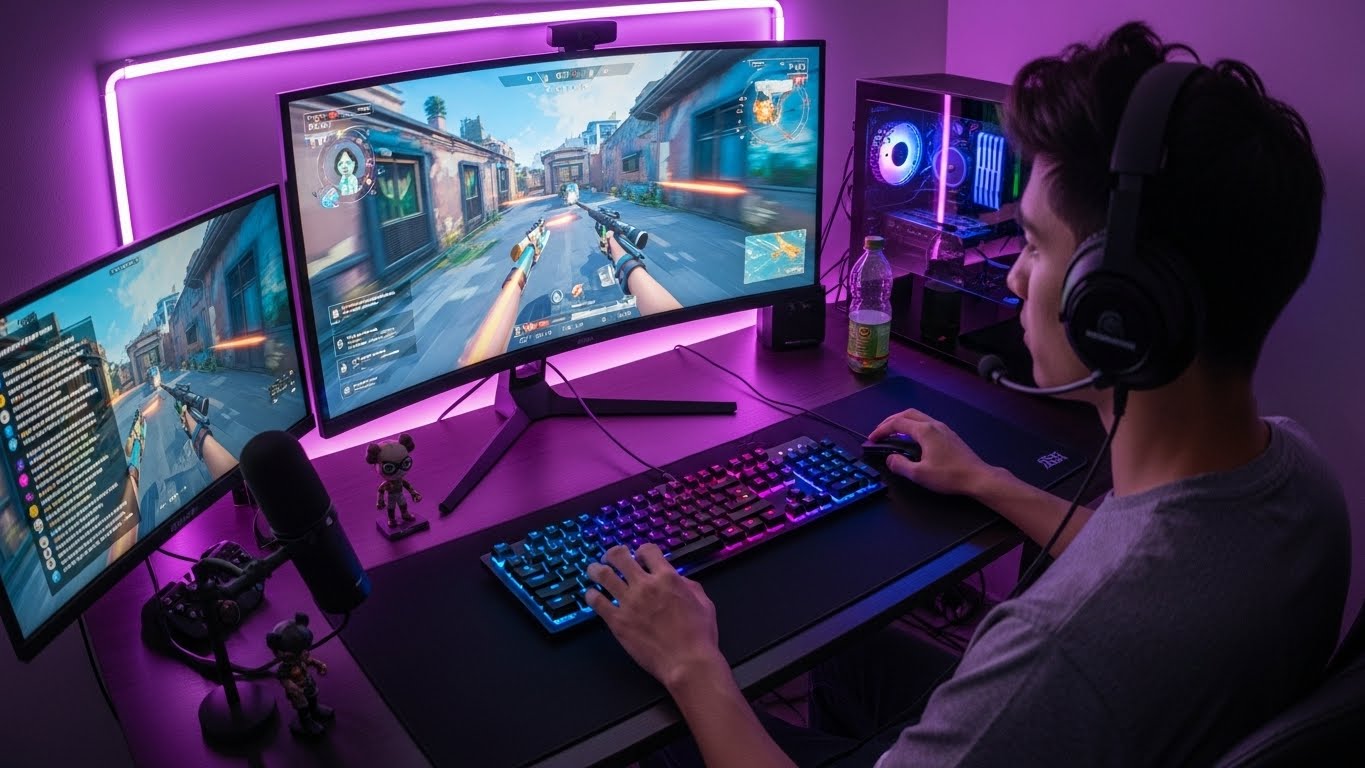
This includes setting boundaries, taking breaks, staying physically active, and being aware of emotional well-being. Many gamers now incorporate exercise routines, ergonomic setups, and digital wellness practices to support healthier gaming habits.
Parents, too, are becoming more informed about guiding their children toward appropriate games and balanced playtime. With mindfulness, gaming can remain a positive, enriching experience for all ages.
The Future of Gaming: Where We Are Headed
The future of gaming looks even more transformative. Technologies like virtual reality and augmented reality are redefining how we interact with digital spaces. VR headsets immerse players in fully interactive 3D environments, while AR overlays digital elements onto the real world.
Artificial intelligence is also shaping the next generation of games, bringing smarter characters, adaptive gameplay, and personalized experiences. Cloud gaming, which allows high-quality play without expensive hardware, is making games more accessible than ever before.
As technology advances, gaming will continue to merge with other industries—education, film, fitness, and even mental health therapy. The boundaries of play will expand beyond screens and controllers into entirely new dimensions of interaction.
Conclusion: Gaming as a Modern Cultural Force
Gaming has evolved far beyond its early beginnings. It has become a hub of creativity, community, skill development, and technological innovation. It brings people together, sparks imaginations, and challenges players in ways that few other mediums can.
Whether someone is seeking adventure, connection, education, or simply a break from the everyday world, gaming offers a space where they can explore, learn, grow, and express themselves. As the industry continues to develop, gaming will remain one of the most influential and dynamic cultural forces shaping our modern lives.
Gaming is no longer just something we play—it is something we live, create, and connect through. It is a part of our world, and for many, it is a way of discovering who they want to be.