
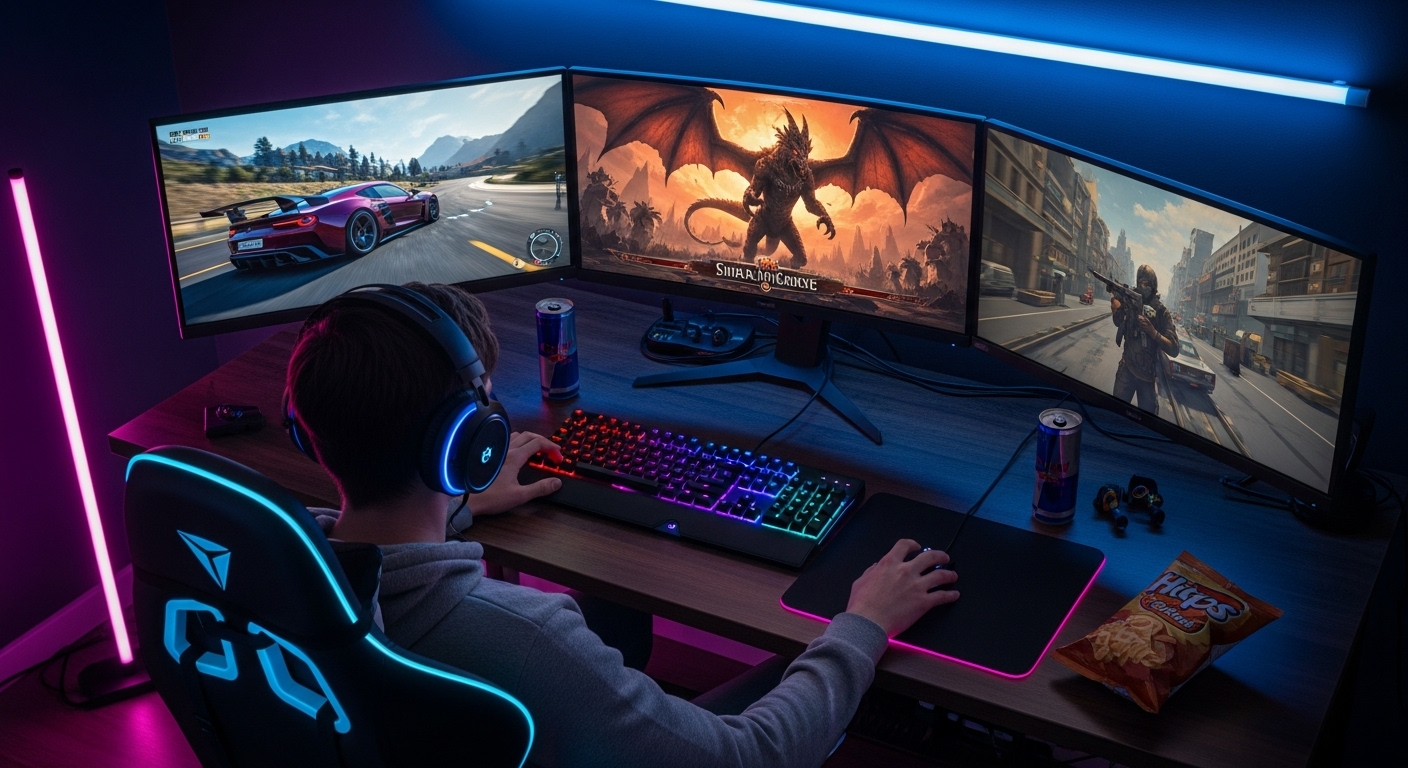
Gaming has undergone a remarkable transformation over the past few decades, evolving from simple, pixelated pastimes to complex, immersive worlds that captivate millions worldwide. From the early days of arcade cabinets to the modern era of virtual reality and cloud gaming, the gaming industry has become one of the largest and most influential forms of entertainment on the planet. This blog explores the history of gaming, the technological innovations that have shaped it, its cultural impact, and the future trends that will continue to redefine what it means to play.
The Birth of Gaming: Early Pioneers and the First Arcade Games
The history of gaming can be traced back to the mid-20th century, where the first experiments in interactive entertainment began. The earliest digital games were rudimentary, with very basic graphics and gameplay mechanics. In the 1950s and 1960s, computer scientists and engineers began creating simple games as part of their research. These games were often used as demonstrations of computing power and were not yet available to the public.
However, the 1970s saw the first commercial games emerge, marking the beginning of the gaming revolution. The iconic arcade game Pong, created by Atari in 1972, was one of the first widely recognized video games and helped establish gaming as a viable form of entertainment. This was followed by other arcade classics like Space Invaders and Pac-Man, which brought video gaming to the masses and created the foundation for what would become a booming industry.
During this time, the concept of “arcades” also emerged, where players could go to pay and play games on machines housed in public spaces. These arcades became social hubs, offering a sense of community and competition that would later carry over into online gaming.
The Rise of Home Consoles: Gaming Becomes Personal
While arcade games dominated the 1970s and early 1980s, the arrival of home consoles changed the landscape of gaming forever. The release of the Atari 2600 in 1977 allowed people to play games in their own homes, eliminating the need for costly trips to the arcade. Soon, other companies like Nintendo and Sega entered the fray, with the Nintendo Entertainment System (NES) and Sega Genesis becoming household names in the 1980s.
These consoles introduced the world to more complex games with better graphics and more immersive gameplay experiences. Iconic titles such as Super Mario Bros., The Legend of Zelda, and Sonic the Hedgehog became cultural touchstones and cemented the importance of gaming in popular culture. During this era, gaming also began to evolve beyond simple action games, with role-playing games (RPGs) like Final Fantasy and The Elder Scrolls series introducing deeper narratives and more strategic gameplay.
The early days of home consoles also set the stage for future innovations, such as multiplayer gaming and the ability to save progress in games, which gave players the freedom to enjoy longer and more intricate stories.
The Digital Age: Online Gaming and the Birth of Esports
The 1990s and early 2000s marked a revolutionary period in gaming, as the Internet and broadband connections began to take hold. This era saw the rise of online gaming, allowing players to connect with others around the world in real time. Games like Doom and Warcraft brought multiplayer experiences to the PC, with players engaging in virtual battles or cooperative missions over local networks and eventually the Internet.
The real breakthrough came with the development of massively multiplayer online role-playing games (MMORPGs) like World of Warcraft. This genre allowed players to explore vast digital worlds, form guilds, and undertake quests together in a persistent online environment. World of Warcraft alone brought millions of players into its world, and its impact on gaming culture cannot be overstated.
Around the same time, competitive gaming began to take shape. While esports had existed in a small, niche form for years, it was in the late 2000s that it exploded into the global phenomenon it is today. Games like StarCraft, League of Legends, and Counter-Strike laid the foundation for the esports industry, with tournaments drawing large audiences and offering significant prize money. Esports now boasts professional teams, sponsorships, and television broadcasts, with millions of fans tuning in to watch tournaments like The International for Dota 2 or the League of Legends World Championship.
Mobile Gaming: Gaming Anywhere, Anytime
The 2010s brought with them a new era of accessibility and convenience in gaming with the rise of mobile gaming. Smartphones revolutionized the way people play games, with companies like Apple and Google introducing app stores that allowed users to download games instantly. Titles like Angry Birds, Candy Crush Saga, and Clash of Clans became massive hits, attracting millions of players who could now game on the go.
Mobile gaming introduced a new audience to the world of gaming, including casual gamers who might not have previously considered themselves “gamers.” The simple mechanics of mobile games made them accessible to all ages, and the freemium model—where games are free to download but offer in-game purchases—became a dominant trend.
This shift toward mobile gaming also had a profound impact on the industry’s business model, with many developers now focusing on free-to-play games supported by microtransactions. Games like Fortnite capitalized on this model, offering cosmetics, skins, and other purchasable content while still being accessible to anyone with a mobile device.
The Social Side of Gaming: Community and Connection
In the past, gaming was often seen as a solitary activity, but modern gaming has transformed into a highly social experience. Online multiplayer games, in particular, have allowed players to connect with friends and strangers from across the globe. Games like Fortnite, Minecraft, Call of Duty, and Apex Legends allow players to team up with others, form communities, and engage in cooperative or competitive gameplay.
The social aspect of gaming has gone beyond just playing together. Platforms like Twitch, YouTube, and Discord have allowed players to live-stream their gameplay, share tips and tricks, and build large, engaged communities. Gaming influencers and content creators now have millions of followers, and their success has helped elevate gaming to mainstream entertainment.
Additionally, gaming conventions like E3 and PAX bring fans, developers, and publishers together, creating a sense of unity and shared excitement. These events allow gamers to interact with one another, try out upcoming games, and meet their favorite streamers and content creators in person.
The Future of Gaming: Virtual Reality, Cloud Gaming, and Beyond
As we look to the future, it’s clear that gaming will continue to evolve in exciting ways. Virtual reality (VR) and augmented reality (AR) are two technologies that are already changing the gaming experience. VR headsets like the Oculus Rift and PlayStation VR allow players to fully immerse themselves in 3D worlds, offering a level of interactivity and realism that traditional gaming cannot match. Similarly, AR games like Pokémon GO use real-world locations as part of the gameplay, creating new ways to interact with both the digital and physical world.
Cloud gaming is another technology set to reshape the industry. Services like Google Stadia, NVIDIA GeForce Now, and Xbox Cloud Gaming allow players to stream games directly to their devices without the need for high-end hardware. This opens up gaming to a wider audience, as people can enjoy cutting-edge games without having to invest in expensive gaming consoles or PCs.
In addition, AI (artificial intelligence) and machine learning will continue to improve game design and gameplay experiences. AI will help create more dynamic, responsive worlds, where the environment and non-player characters (NPCs) react in real time to the player’s actions. This could lead to more personalized, adaptive experiences where every player’s journey is unique.
The Economic Impact of Gaming: A Multi-Billion Dollar Industry
Gaming has grown into one of the most lucrative industries in the world, generating more revenue than both the film and music industries combined. In 2021, the global gaming industry was valued at over $159 billion, and this number is expected to continue rising. The industry encompasses not only game development but also marketing, esports, live-streaming, and merchandising. With millions of people playing games daily, the gaming industry creates jobs for developers, designers, producers, content creators, and professional gamers.
Esports is one of the fastest-growing sectors of the gaming industry, with sponsorships, advertising, and media rights fueling its expansion. Major esports events now draw audiences comparable to traditional sports events, and top-tier players can earn substantial salaries, endorsements, and prize money.
Conclusion: The Ever-Expanding World of Gaming
The journey of gaming has come a long way from its humble beginnings in the 1970s. What started as simple arcade machines has now grown into a vast, multifaceted entertainment industry that continues to evolve at a rapid pace. Whether it’s through the immersive worlds of virtual reality, the rise of esports, or the convenience of mobile gaming, the future of gaming is bright and full of potential.
As technology advances, so too will the gaming experiences we can expect. The lines between reality and the virtual world will continue to blur, and the next generation of gamers will be able to experience games in ways we can’t yet imagine. Gaming, once considered a niche hobby, is now a global cultural force, and its influence will only continue to grow.
For those who have embraced gaming, it’s clear that the digital playground is just getting started. Whether you’re a casual player, a professional gamer, or someone who simply enjoys watching the excitement unfold, one thing is certain—gaming is here to stay.