
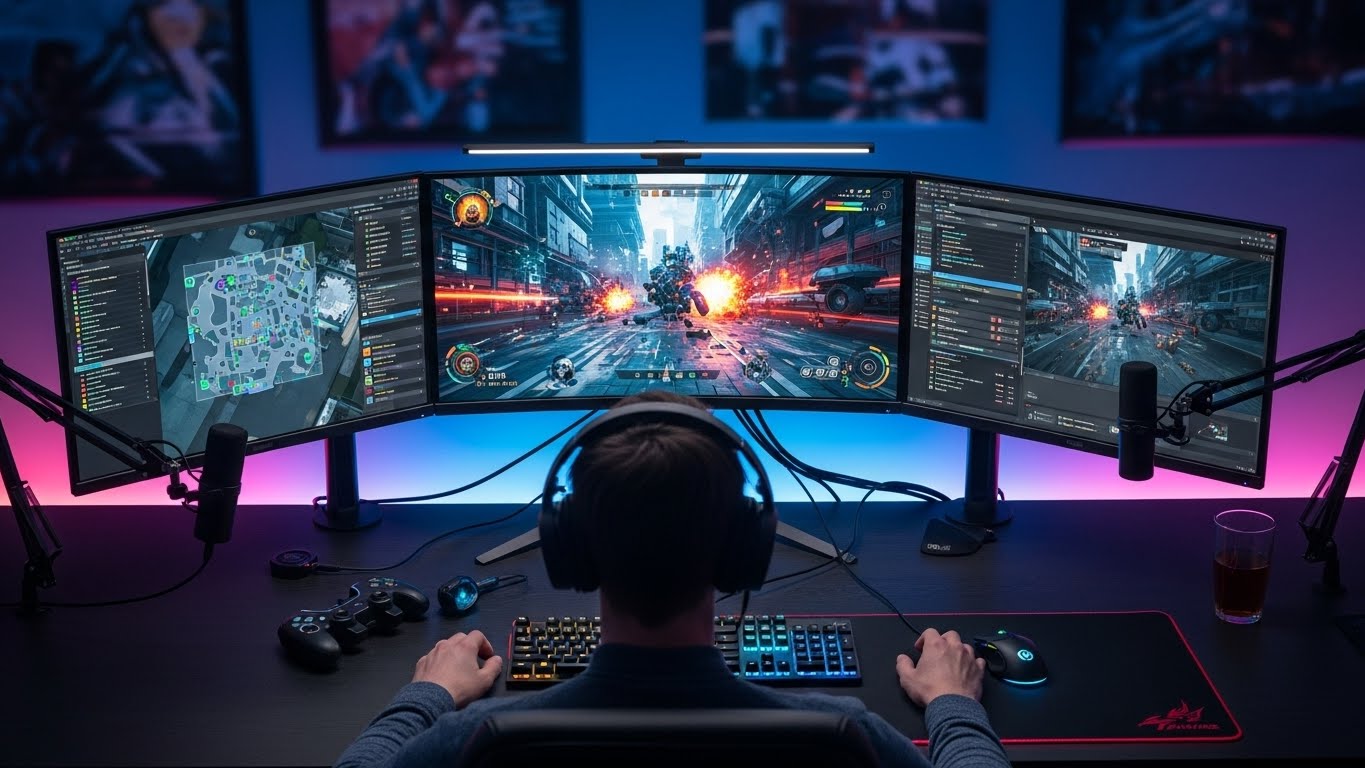
Gaming has evolved far beyond its early beginnings as a niche hobby. What once started as simple pixelated screens on arcade machines has transformed into a multi-billion-dollar global industry. Today, gaming encompasses a wide variety of experiences, from competitive eSports tournaments to story-driven console games, mobile applications, and immersive virtual reality worlds. The industry continues to expand rapidly, shaping entertainment culture, technology trends, and social interaction. In this blog post, we will explore the evolution of gaming, its technological advancements, cultural impact, and what the future may hold for players and developers alike.
The Evolution of Gaming
The history of gaming can be traced back to the 1970s, with the emergence of arcade games like Pong and Space Invaders. These early games captured the imagination of a generation and laid the foundation for the gaming industry. As technology advanced, home consoles like the Atari 2600 and Nintendo Entertainment System brought interactive entertainment into living rooms around the world.
The 1990s saw the rise of PC gaming and the introduction of online multiplayer games. Titles like Doom, Quake, and StarCraft introduced competitive gaming communities, creating opportunities for collaboration, strategy, and skill development. Today, gaming has become a ubiquitous part of modern life, appealing to people of all ages, genders, and backgrounds. The diversity of platforms—from consoles and PCs to smartphones and cloud-based gaming—ensures that gaming is accessible to a global audience.
The Role of Technology in Gaming
Technological advancements have been a driving force in the evolution of gaming. Graphics, artificial intelligence, and immersive audio have transformed how games are designed and experienced. High-definition visuals, realistic physics engines, and detailed environments create worlds that feel alive, allowing players to engage in complex narratives or competitive challenges.
Artificial intelligence plays a critical role in shaping gameplay. AI-controlled characters adapt to player behavior, providing challenging opponents and enhancing immersion. Procedural generation allows developers to create expansive game worlds with infinite possibilities, offering unique experiences to each player. Additionally, cloud gaming technology has enabled instant access to games without the need for powerful hardware, making gaming more inclusive than ever before.
Mobile Gaming: Entertainment on the Go
The advent of smartphones revolutionized gaming by putting interactive entertainment in the hands of millions worldwide. Mobile gaming has become a dominant force in the industry, with casual games, puzzle challenges, and competitive apps appealing to a wide audience. Games like strategy puzzles, card games, and battle arenas provide entertainment for short bursts of time or extended sessions.
Mobile gaming has also introduced social and competitive features, allowing players to connect with friends or compete globally. Daily challenges, in-game achievements, and leaderboards provide incentives for continuous engagement. Furthermore, mobile games often integrate microtransactions or cosmetic upgrades, creating opportunities for developers while enhancing player experience.
The Rise of eSports
eSports, or competitive video gaming, has transformed gaming into a professional sport. Tournaments for games like League of Legends, Dota 2, and Counter-Strike attract millions of viewers, with professional teams, sponsorships, and substantial prize pools. eSports has created a new career path for skilled players, commentators, and analysts, turning gaming into a viable profession.
The popularity of eSports highlights the social and community aspects of gaming. Spectators can watch live streams, participate in fan communities, and interact with professional players. Competitive gaming fosters teamwork, strategy, and communication skills, offering experiences that extend beyond traditional gameplay. eSports has also inspired local gaming leagues and amateur tournaments, making competitive gaming more accessible at all levels.
Virtual Reality and Immersive Experiences
Virtual reality (VR) and augmented reality (AR) are reshaping how players interact with games. VR headsets allow players to enter fully immersive worlds, interact with objects, and feel as though they are part of the game environment. Titles such as immersive RPGs, simulators, and adventure games provide experiences that were previously impossible on traditional screens.
AR gaming overlays interactive elements onto the real world, blending physical and digital experiences. Popular AR games have encouraged exploration, social interaction, and outdoor activity while providing entertainment. These technologies not only enhance gameplay but also influence the development of training simulations, educational tools, and creative applications in non-gaming industries.
The Cultural Impact of Gaming
Gaming has become an influential cultural force, shaping social interaction, media, and entertainment trends. Online multiplayer games foster global communities, connecting players across continents and time zones. Social features, such as guilds, clans, and cooperative missions, encourage collaboration and communication among players.
Story-driven games also contribute to cultural expression, offering narratives that explore themes such as identity, morality, and human experience. Video games can reflect societal values, challenge norms, and inspire empathy by allowing players to experience perspectives different from their own. Cosplay, fan art, and streaming platforms further amplify gaming culture, creating vibrant communities that extend beyond the game itself.
Game Development and Creativity
Game development is a blend of technology, creativity, and storytelling. Developers design mechanics, characters, and worlds that engage players on multiple levels. Narrative-driven games require careful planning of plotlines, dialogue, and character development, while strategy and puzzle games focus on balance, challenge, and problem-solving.
Indie game development has grown significantly in recent years, empowering small teams or individual creators to produce innovative and experimental games. Platforms that support independent development provide opportunities for unique concepts, niche genres, and artistic expression. The creativity involved in game development continues to push the boundaries of what gaming can be, expanding both the medium and its audience.
The Psychology of Gaming
Gaming is more than entertainment; it engages players mentally, emotionally, and socially. Gamification techniques, such as rewards, progression systems, and achievements, provide motivation and reinforce positive behaviors. Games can also improve cognitive skills, including problem-solving, spatial awareness, and strategic thinking.
Social gaming fosters collaboration, competition, and community. Multiplayer experiences allow players to build relationships, develop teamwork, and experience social interaction in digital spaces. However, it is essential to balance engagement with responsible gaming practices, ensuring that play remains enjoyable without negative consequences.
Future Trends in Gaming
The future of gaming promises continued growth, innovation, and integration into everyday life. Cloud gaming will likely expand access, reducing dependency on expensive hardware while enabling more players to experience high-quality games. Artificial intelligence will further personalize gameplay, creating adaptive experiences tailored to individual preferences.
Virtual reality, augmented reality, and mixed reality will continue to push immersive experiences, creating environments that blend the digital and physical worlds. Social and community features will become more prominent, with games functioning as social platforms as much as entertainment mediums. Additionally, cross-platform integration will allow players to interact seamlessly across devices, expanding the reach and connectivity of gaming communities.
Emerging technologies such as blockchain and non-fungible tokens may introduce new forms of ownership, trading, and monetization within games. While these developments carry challenges, they offer innovative possibilities for players and developers alike. As gaming continues to evolve, it will remain a dynamic, engaging, and culturally significant form of interactive entertainment.
Challenges in the Gaming Industry
Despite its rapid growth, gaming faces several challenges. Regulatory and ethical considerations, such as age restrictions, in-game purchases, and data privacy, require careful attention. Cybersecurity threats and online harassment can affect player safety and experience. Additionally, balancing monetization strategies with fair gameplay remains a constant concern.
The industry also faces challenges in inclusivity and accessibility. Developers are working to create games that cater to diverse audiences, including people with disabilities, different cultural backgrounds, and varying skill levels. Addressing these challenges is essential to ensure that gaming remains welcoming, engaging, and sustainable for future generations.
Conclusion
Gaming has transformed from a niche pastime into a global cultural phenomenon. With advances in technology, creativity in development, and the growth of competitive and social experiences, gaming continues to redefine entertainment. From console adventures to mobile apps, VR worlds, and eSports arenas, the industry offers diverse experiences that appeal to millions worldwide.
As gaming evolves, it will continue to shape culture, technology, and social interaction. Players gain not only entertainment but also cognitive skills, social connections, and immersive experiences. Developers push creative boundaries, exploring new gameplay mechanics, narratives, and interactive environments. The future of gaming is bright, dynamic, and full of possibilities, promising experiences that will continue to captivate and inspire generations to come.