
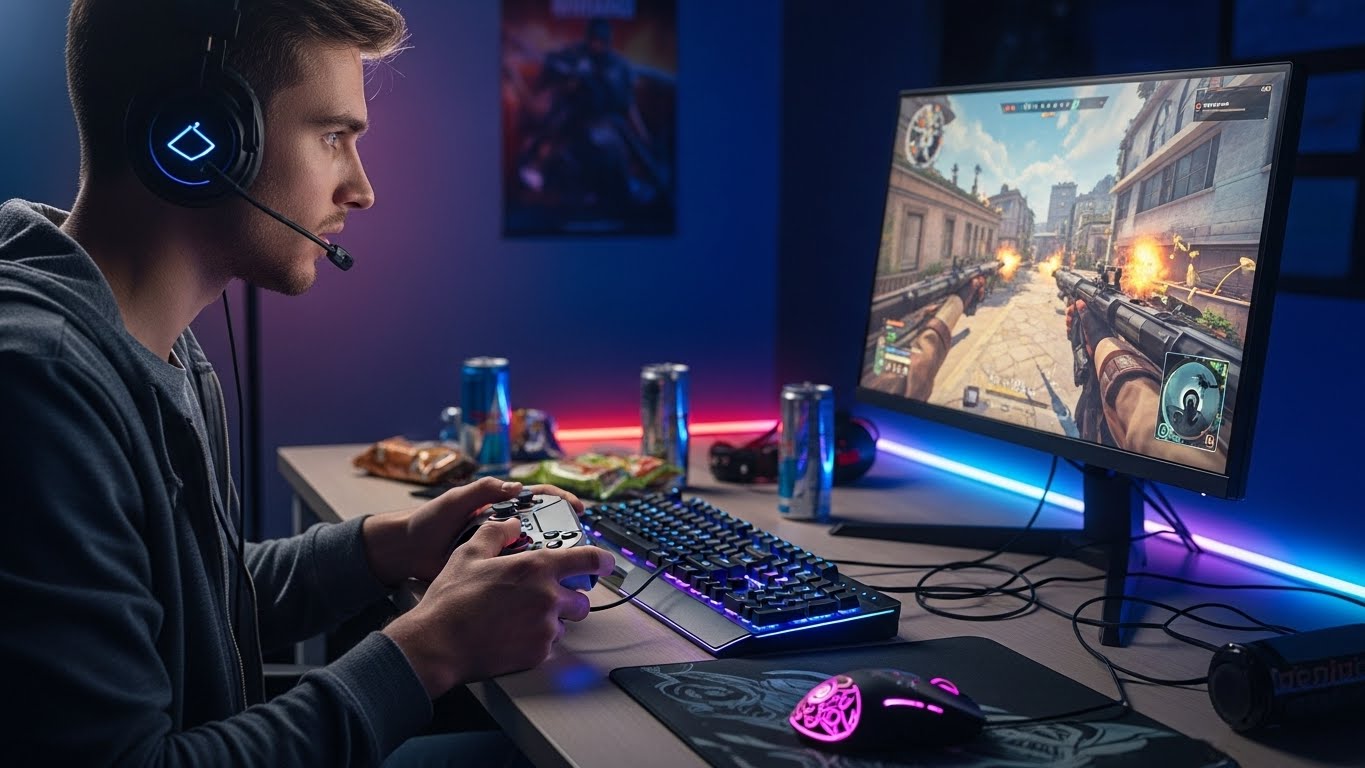
Introduction: A New Era of Interactive Entertainment
Gaming has come a long way from the simple pixels of early arcade machines. What began as a pastime with basic controls and limited storylines has evolved into an expansive universe filled with complex narratives, competitive arenas, life-like graphics, and global communities. Today, gaming is not just a form of entertainment; it is a culture, a career path, a social platform, and a creative outlet. This blog explores how gaming continues to shape the modern world and what its rapid evolution means for players, creators, and society as a whole.
The Evolution of Gameplay Mechanics
In the early days of gaming, mechanics were straightforward. Players moved a character left or right, jumped over obstacles, or shot at targets. Over time, these mechanics became more refined, blending realism and creativity. Today’s games often involve intricate physics systems, dynamic real-time decision making, and open-world environments that allow for freedom and experimentation.
Modern titles provide players with choices that influence outcomes, encouraging replayability and deeper immersion. Developers also integrate adaptive difficulty systems that adjust gameplay based on how a player performs. This evolution has made gaming not only more engaging but also more accessible to a wider range of skill levels.
The Rise of Story-Driven Games
Storytelling in gaming has grown into a powerful medium capable of evoking emotion, presenting moral dilemmas, and creating memorable experiences. Games now rival films and novels in narrative depth. Instead of passively watching events unfold, players participate directly in the story, making decisions that shape the journey and its ending.
The strength of gaming narratives lies in interactivity. Whether it is a protagonist’s struggle, a world full of secrets, or relationships developed through player choices, story-driven games allow players to connect on a deeper level. This shift has pushed writers, designers, and actors to collaborate in new ways, elevating gaming into an art form of its own.
Graphics and Technology: Pushing the Boundaries of Reality
One of the most striking developments in gaming is the progression of graphics technology. From hand-crafted pixel art to hyper-realistic visuals, the evolution has been nothing short of extraordinary. Modern hardware and game engines can render detailed landscapes, expressive character animations, and dynamic lighting with astonishing fidelity.
Virtual reality and augmented reality have added another layer by placing players directly inside digital worlds. These technologies blur the boundary between the real and virtual, allowing players to experience environments and stories in ways that were once unimaginable. With each new generation of technology, gaming edges closer to cinematic realism, making each session feel like stepping into a living, breathing universe.
Competitive Gaming and the Esports Phenomenon
What was once a casual hobby has grown into one of the world’s most watched competitive industries. Esports brings players from around the globe together to compete in organized tournaments with prize pools that rival traditional sports. Games that require quick reflexes, strategic planning, and teamwork have become staples in this arena.
The rise of esports has created opportunities for professional players, commentators, coaches, analysts, and event organizers. Streaming platforms allow players to build careers by broadcasting gameplay to dedicated audiences. Competitive gaming is now recognized as a career path, with training programs, sponsorships, and scholarships supporting aspiring players.
Gaming as a Social Experience
Gone are the days when gaming was seen as a solitary activity. Today, most games are built with some form of social interaction in mind. Whether it is teaming up with friends for cooperative missions, chatting in virtual spaces, or competing in online arenas, gaming connects people across countries, cultures, and backgrounds.
Voice chat, text messaging, and customizable avatars help players express themselves and form communities. Some players make lifelong friendships through gaming, while others join clans or guilds that function much like real-world social circles. For many, gaming is not just a pastime but a home where they feel understood and connected.
Creativity and User-Generated Content
Another aspect of gaming’s evolution is the rise of player-created content. Many modern titles allow players to design levels, build custom maps, create characters, and even script game logic. This shift transforms players from consumers into creators, giving them tools to shape their own experiences.
These creative systems have launched careers for designers and artists who began by experimenting within games. User-generated content keeps games alive long after release, adding variety and personality to each playthrough. It also fosters collaboration between communities and developers, showing how creativity thrives when players are empowered.
The Psychological Impact of Gaming
Gaming influences players in numerous ways, many of which extend beyond entertainment. Research has shown that certain games can improve cognitive abilities such as problem-solving, strategic thinking, attention to detail, and hand-eye coordination. Games that challenge the mind encourage players to adapt, analyze, and react in real time.
On the emotional level, games can provide comfort, escapism, and stress relief. Story-rich games may help individuals process complex feelings, while cooperative games offer social support. When balanced responsibly, gaming can become a beneficial part of a healthy lifestyle.
At the same time, it is important to acknowledge potential challenges. Excessive gaming can affect sleep patterns or productivity. Developers and players alike are increasingly aware of the importance of moderation, ensuring that gaming remains a positive experience.
Gaming as a Career: New Paths and Opportunities
The gaming industry has expanded into a massive global ecosystem with countless career opportunities. Beyond professional playing, individuals can pursue jobs in game design, programming, animation, sound engineering, writing, marketing, and community management.
The rise of content creation has opened new doors for gamers who enjoy sharing their experiences. Streamers and video creators build personal brands, share tutorials, entertain audiences, and form communities around their content. Gaming events, conventions, and festivals provide additional avenues for networking and collaboration.
As the industry continues to grow, demand for skilled professionals rises. For many, gaming is not just a hobby but a gateway to meaningful, creative, and impactful work.
The Future of Gaming: Where Are We Heading?
The future of gaming is filled with possibility. Advancements in artificial intelligence promise more intelligent opponents and dynamic worlds that adapt to player choices. Cloud gaming aims to make high-performance experiences accessible without expensive hardware, breaking down barriers for new players. Procedural generation is expanding worlds to infinite possibilities, ensuring no two adventures are the same.
We may see even deeper integration of virtual and augmented reality, creating experiences that blend physical and digital environments. Social gaming platforms will continue to evolve, offering new ways to connect and collaborate. As technology advances, the boundaries of what a game can be will continue to expand.
Conclusion: A Universe That Continues to Grow
Gaming has transformed from a simple pastime into a vast universe of creativity, connection, and innovation. It bridges cultures, drives technology forward, and inspires imagination in ways few other mediums can. What makes gaming extraordinary is its ability to evolve with us, adapt to our interests, and offer experiences that feel personal and profound.
As we look ahead, gaming will continue to shape our world, offering new adventures, challenges, and communities. Whether you play casually or competitively, whether you explore epic stories or create your own worlds, gaming remains a place where everyone can find something meaningful. It is more than entertainment—it is a living, evolving form of human expression.